+33 9 8080 1114
 +230 5457 0712

The essentials in 30 seconds
- No vaccine is compulsory when arriving from France: simply check your boosters with your doctor, as you would for any trip.
- Your medicines travel in their original packaging, with a prescription written under the name of the active ingredient. Some are banned (cannabis, CBD, Ritalin) or require authorisation from the Ministry of Health (tramadol, strong codeine, Xanax, Lexomil, sleeping pills).
- Mosquitoes: as anywhere in the tropics, a few simple habits are enough. Keep windows closed in the evening, leave no standing water around the house, and use a repellent for walks.
- In the lagoon, water shoes protect you from stonefish and sea urchins. Swim only where there is supervision: currents cause drownings every year.
- Sun: factor 50+ cream, a hat, and repellent 20 minutes after the cream.
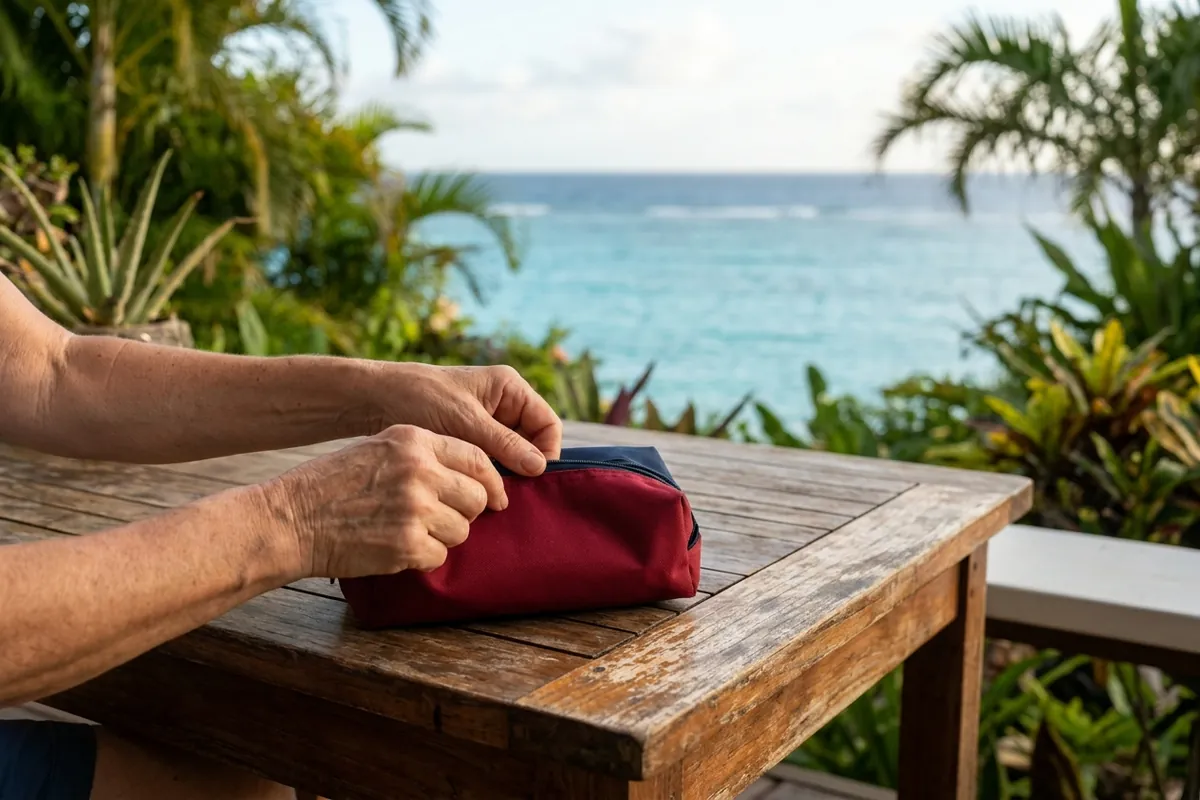
What to put in the kit
There is no standard kit: it depends on your health and the length of your stay. Here is the basic list recommended by the French health authorities for a tropical country, to be adapted with your doctor or pharmacist.
Medicines and equipment
- Paracetamol for pain and fever (no aspirin or ibuprofen without medical advice).
- An anti-diarrhoeal and oral rehydration sachets.
- An antihistamine for allergies and insect bites.
- An antiseptic, sterile plasters, tweezers, a thermometer.
- Saline solution and single-dose eye drops, a cream for burns.
Plus your usual treatments, in sufficient quantity.
Against mosquitoes, the sun and the lagoon
- A mosquito repellent for the skin (DEET, icaridin or IR3535).
- Sun cream, factor 50+.
- A hand sanitiser gel.
- Water shoes for the lagoon.
- A mosquito net, if your home is not air-conditioned.
Repellent goes on 20 minutes after sun cream.
Our advice
No suppositories in your suitcase: they melt in the heat. Ask your pharmacist for the same active ingredient in tablets.
Which vaccines for Mauritius?
Good news: when arriving from France, no vaccine is compulsory to enter Mauritius. Only yellow fever is required, and only for travellers coming from a country where it is present.
Simply use your check-up with the doctor before departure to review your usual boosters (diphtheria, tetanus, polio, whooping cough, measles). If you are moving, they will tell you whether hepatitis A or typhoid vaccination is worthwhile in your case.
Medicines: what is allowed and what is banned
Mauritian customs lets travellers bring in their medicines for a course of treatment if they have a valid prescription. Keep them in their original packaging, and ask your doctor for a prescription that gives the name of the active ingredient (paracetamol, amlodipine…): this is the name you will find in the island's pharmacies.
But Mauritius classes some medicines that are common in France as narcotics. They are prohibited, or they require authorisation from the Ministry of Health before you travel.
Even with a prescription
- Cannabis, including CBD and medical cannabis.
- Methylphenidate (Ritalin, Concerta).
Do not take them with you: ask your doctor about an alternative treatment.
Authorisation to request before you leave
- Tramadol, and codeine in high doses (low doses in combination products are exempt).
- Anxiolytics: Xanax, Lexomil, Valium, Rivotril…
- Sleeping pills: zolpidem (Stilnox), zopiclone (Imovane).
- Pregabalin (Lyrica).
Prescription + authorisation, and go through the red channel at customs.
Good to know
Travellers have already been arrested at the airport with tramadol or pregabalin without a prescription or authorisation. The fine can be as much as Rs 1 million (about $21,000), along with a prison sentence.
Our advice
If you take any of these medicines, ask the Mauritian Ministry of Health for authorisation well before you leave: no processing time is published. And take a letter from your doctor, in English if possible, listing your treatments.
Are you preparing to move rather than just visit? A treatment can be renewed locally, and our test shows you which permit suits you.
Mosquitoes: a few simple habits are enough
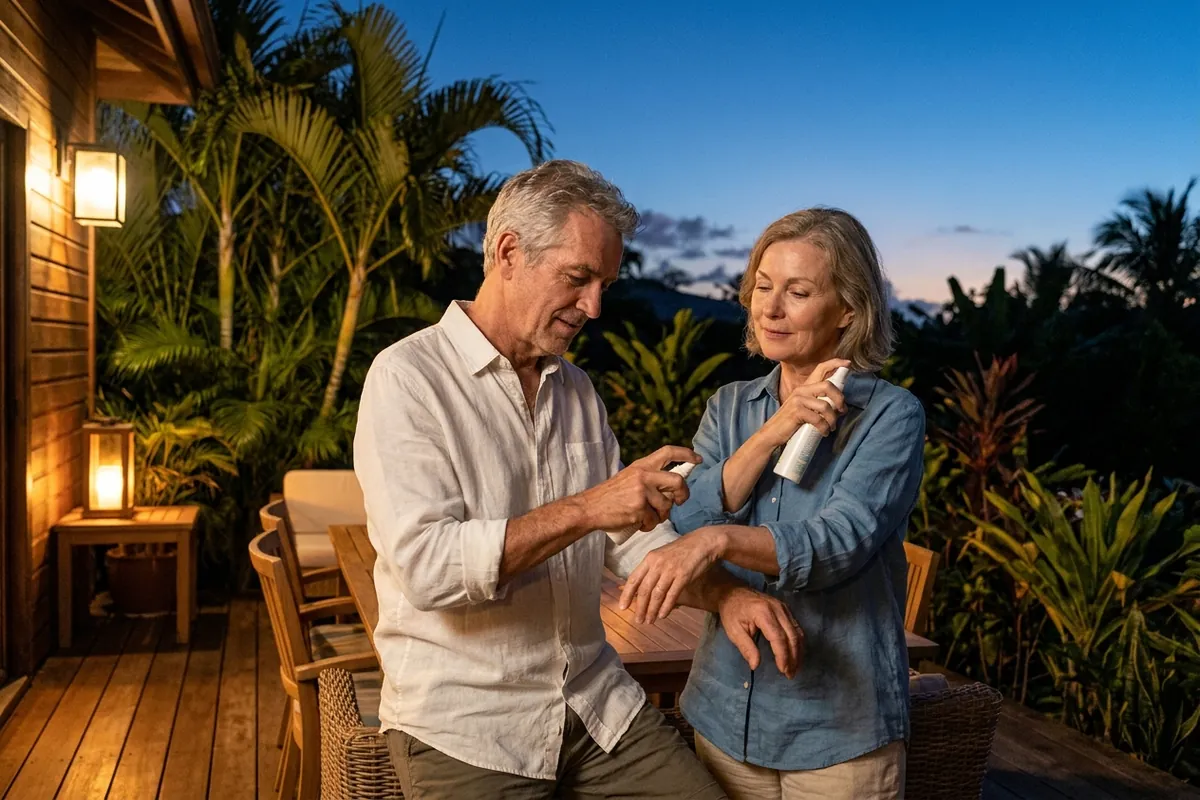
As anywhere in the tropics, there are mosquitoes in Mauritius, especially in summer and after rain. They can transmit dengue or chikungunya: outbreaks get talked about in the media, but in daily life a few simple habits are enough.
- Close the windows in the evening, or sleep with the air conditioning on or under a mosquito net.
- No standing water around the house: saucers, buckets, gutters. This is where mosquitoes lay their eggs.
- Repellent for walks at the end of the day, based on DEET, icaridin or IR3535, sold in pharmacies.
- A fever that won't go away? See a doctor, and in the meantime take paracetamol rather than aspirin or ibuprofen.
Our advice
Even in the worst years, these outbreaks affect about 0.5% of the population, mostly in very green areas. Be careful, but don't panic.
In the lagoon: precautions to take
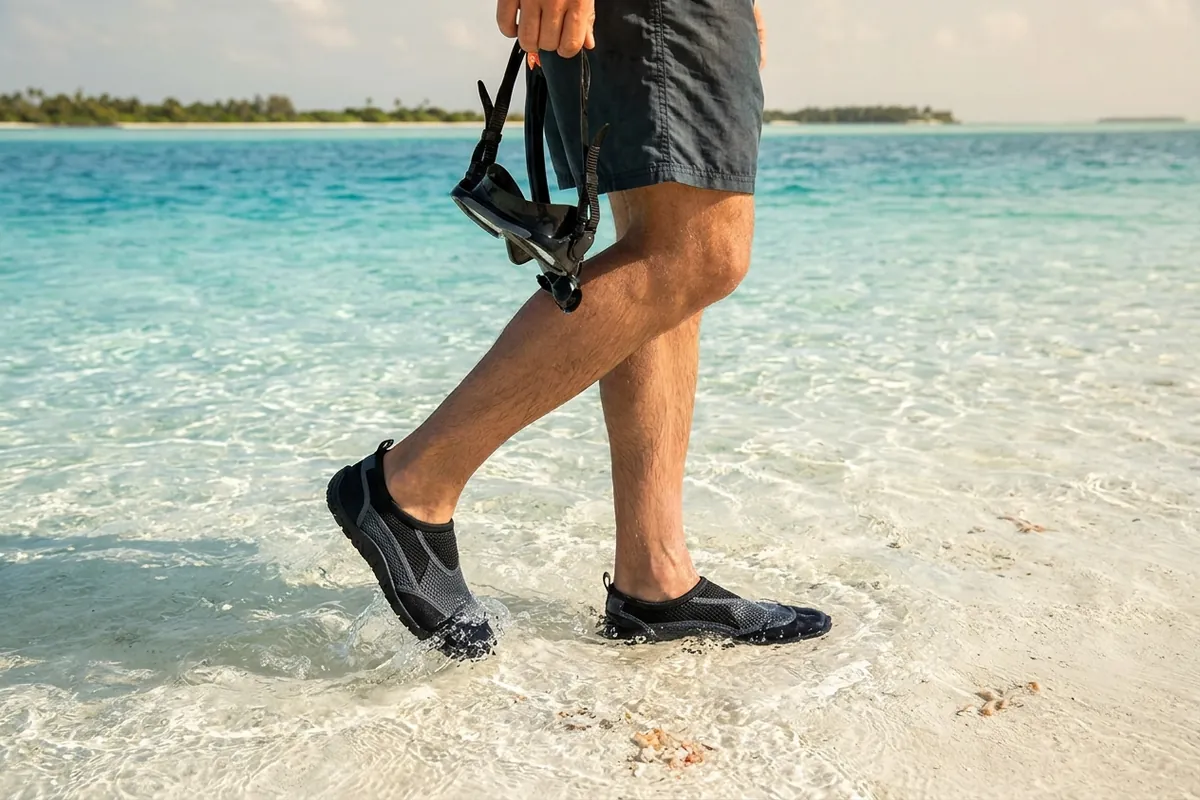
The lagoon is calm and shallow, but never walk in it barefoot. The stonefish (the "laff") blends in with the rocks, and its sting is very painful. Sea urchins leave spines under the skin, which can become infected. Cone shells, pretty as they are, are venomous: do not pick them up.
Stonefish sting: what to do
-
1
Get out of the water
Move as little as possible and call for help.
-
2
Hot water
Soak the sting in the hottest water you can bear, no more than 45°C.
-
3
Call 114
Then head to A&E: the pain needs treating.
-
4
Tetanus
Check that your vaccination is up to date.
Good to know
The currents in the passes, where the reef opens, sweep swimmers away every year. Only swim in supervised areas, never alone, and never in rough seas, during or after a cyclone.
The sun, the heat and water
The tropical sun burns quickly, even when it is hazy. Wear SPF 50+ sunscreen, a hat and sunglasses, and stay in the shade during the hottest hours. Drink often, especially in summer, from November to April.
Tap water is treated and monitored by the public water utility, the CWA. Even so, France advises travellers to drink bottled water and to peel fruit thoroughly. During the cyclone season, from November to April, keep a stock of bottled water at home.
Sources: Mauritian customs (mra.mu), Dangerous Drugs Act 2000, Ordre des pharmaciens (Conseils aux voyageurs 2026 brochure, based on the HCSP), diplomatie.gouv.fr (Mauritius, health and safety), ECDC, sante.fr, Mauritius Police Force (coastguard), Central Water Authority. Read in November 2026.