Skip to content
Expatriation-Maurice
Which visa or permit is right for you?

Free, 2 minutes, instant result.

Take the quiz
Free call-back request
2026-2027 season · live·Mauritius

Cyclones in Mauritius

The season has been open since 1 November and runs until 15 May. Here is today's notice, the log of the season, what each warning class means and how to get organised, whether you already live here or are arriving soon.

Updated 19 November 2026

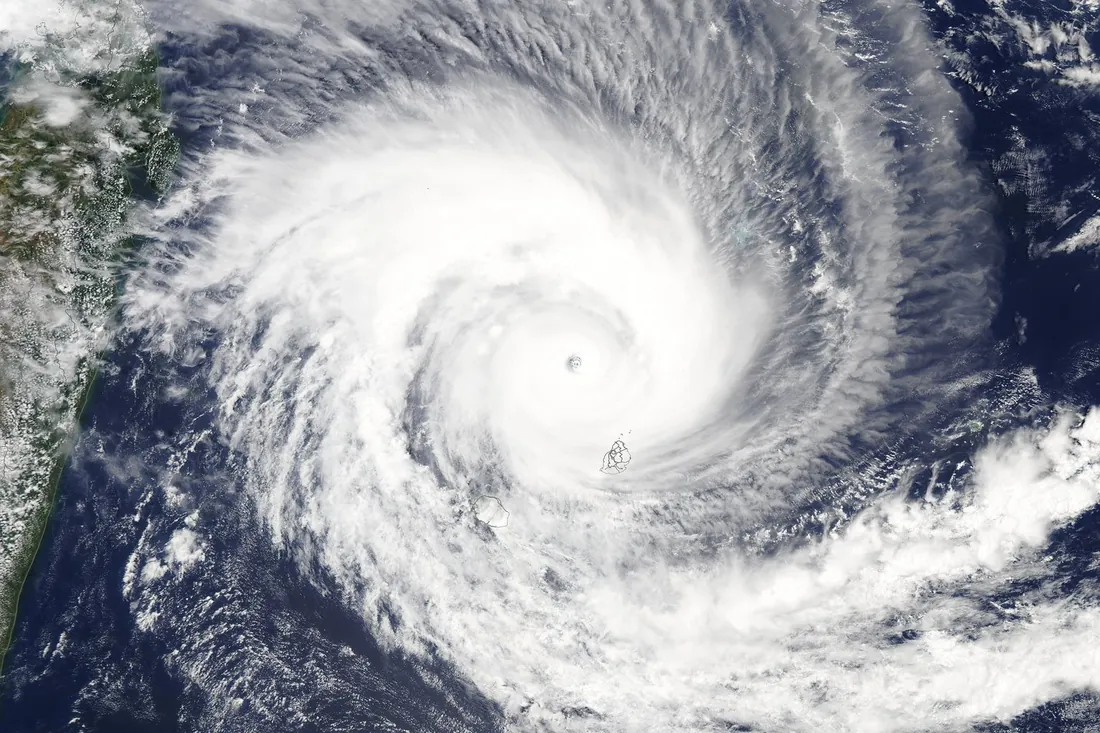
Cyclone Batsirai seen by satellite above the Indian Ocean, 3 February 2022
No cyclone warningMMS bulletin read on 8 November at 3.50pm
  • 1 Nov → 15 Maythe official season in Mauritius
  • 5 à 7named storms forecast in the basin
  • 4 classesof cyclone warning, from I to IV
  • 120 km/hthe gusts that guide each warning
The consultations

What to do at each stage?

Tap what applies to you: the steps that matter most to you come first.

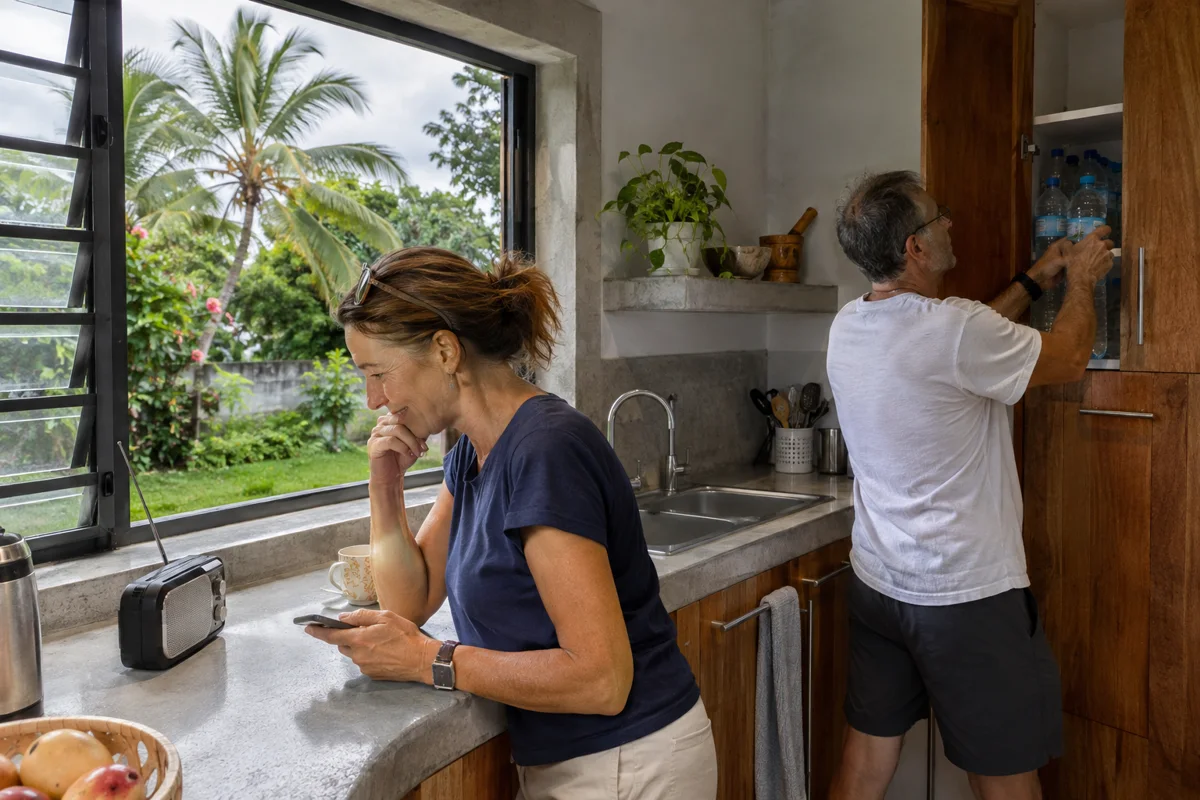
A woman listens to the radio in her kitchen while her husband puts away bottles of water (illustration) 36 to 48 hours before the gusts

Life goes on as normal

Class I warningThe cyclone is still far away: time to prepare

The MMS issues the Class I warning 36 to 48 hours before gusts of 120 km/h could reach the island. Nothing closes. This is the time to check your kit, buy whatever is missing and follow the bulletins. A Class I warning can also end there: if the cyclone changes course, the MMS announces the end of the alert without moving on to the next classes.

When
36 to 48 hours before
Schools and offices
Schools and offices
Outside
Open
At home
Outside
What helps, and what you need to know

What helps

  • Normal traffic
  • Kit checked

Good to know

  • Shops open: time to complete your kit
  • Bulletins in French, English and Creole on the MMS website

A couple in the living room of a bright house, the man on the phone by the picture window, in the rain (illustrative image) 12 hours of daylight before the gusts

You can still get around

The warning applies to Mauritius: Rodrigues has its ownSchools close, and you finish getting ready

As far as possible, a Class II warning leaves 12 hours of daylight before gusts of 120 km/h. Schools close, and boats are taken out of the water and tied down. You can still get around: you finish the shopping, build up a stock of drinking water, clear the garden and get the shutters ready.

When
12 hours of daylight before
Schools and offices
Schools closed
Outside
You can still get around
At home
Water stored, garden cleared
What helps, and what you need to know

What helps

  • The day is for finishing everything before Class III
  • Offices are still working: time to get organised

Good to know

  • Plan to keep the children at home
  • Check that your kit has all the essentials
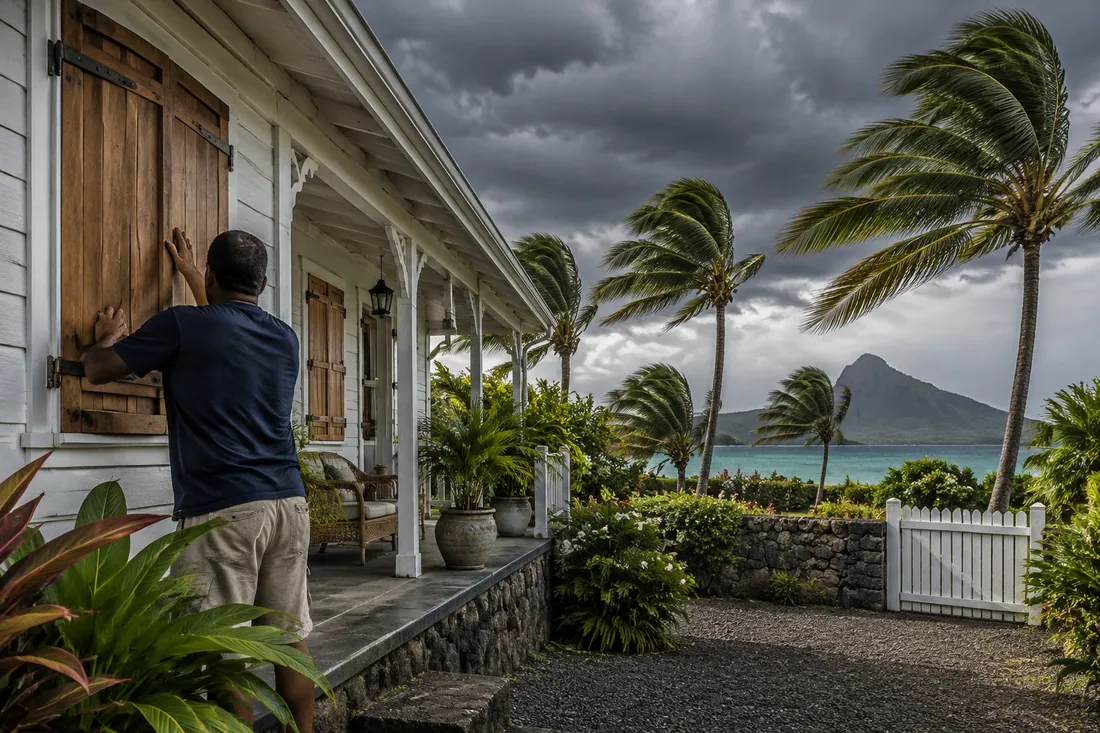
A man closes the wooden shutters of a Creole house under a grey sky (illustrative image) 6 hours of daylight before the gusts

Shutters closed, car under cover

Class III warningEveryone goes home

As far as possible, a Class III warning leaves 6 hours of daylight. Businesses let their employees go. You secure the shutters, put away anything lying around, shelter your animals and your car, and avoid going out. If your home is not safe, this is the time to head to the nearest shelter with your kit.

When
6 hours of daylight before
Schools and offices
Employees sent home
Outside
Avoid going out
At home
Shutters secured, animals indoors
What helps, and what you need to know

What helps

  • During Classes III and IV, you can stay at home on your usual pay
  • The whole family is together before nightfall

Good to know

  • On the road, a car is in principle no longer insured: re-read your policy
  • Avoid the seafront and areas that flood
A family plays cards on a mattress in a windowless corridor by lantern light, the dog beside them (illustrative image) Gusts of 120 km/h recorded

The longest stretch

Class IV warningYou stay sheltered and do not go out

Class IV is issued when gusts of 120 km/h are recorded in some places and are expected to last. You stay in the safest part of the house, unplug electrical appliances and follow the bulletins on the radio. If the eye of the cyclone passes over you, the calm does not last: the wind comes back, just as violent, from the other side.

When
Gusts recorded
Schools and offices
Everything closed
Outside
Do not go out
At home
Safe room, battery radio
What helps, and what you need to know

What helps

  • A battery radio is enough to follow the bulletins
  • A pack of cards and some books help children pass the time

Good to know

  • Water and electricity may be cut off
  • Do not go out during the eye: it signals the second half
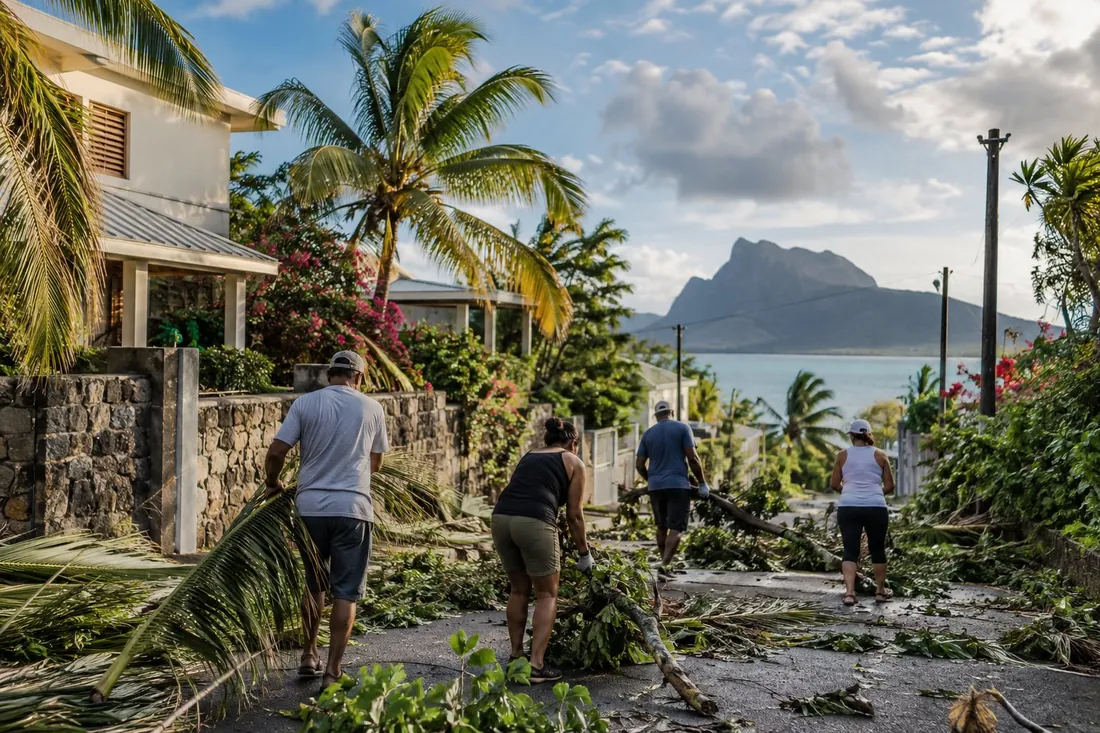
The day after a cyclone, neighbours pick up fallen palm fronds in a village street (illustrative image) Safety bulletin, then the all-clear

Life gets back to normal

After the cycloneWait for the green light before going out

Once the risk of gusts recedes and the cyclone moves away, the MMS issues a safety bulletin that lifts Class III or IV. Wind, heavy rain or swell may remain. The all-clear comes afterwards, on the advice of the National Crisis Committee. Outside, beware of fallen power lines, trees and swollen rivers.

When
The cyclone moves away
Schools and offices
Reopening announced
Outside
Fallen lines and trees
At home
Boiled water
What helps, and what you need to know

What helps

  • No return to work required before the Crisis Committee gives the green light, or without transport
  • The safety bulletin tells you what is still a risk: wind, rain or swell

Good to know

  • Do not eat fallen fruit, and boil your drinking water
  • Empty any standing water: it attracts mosquitoes
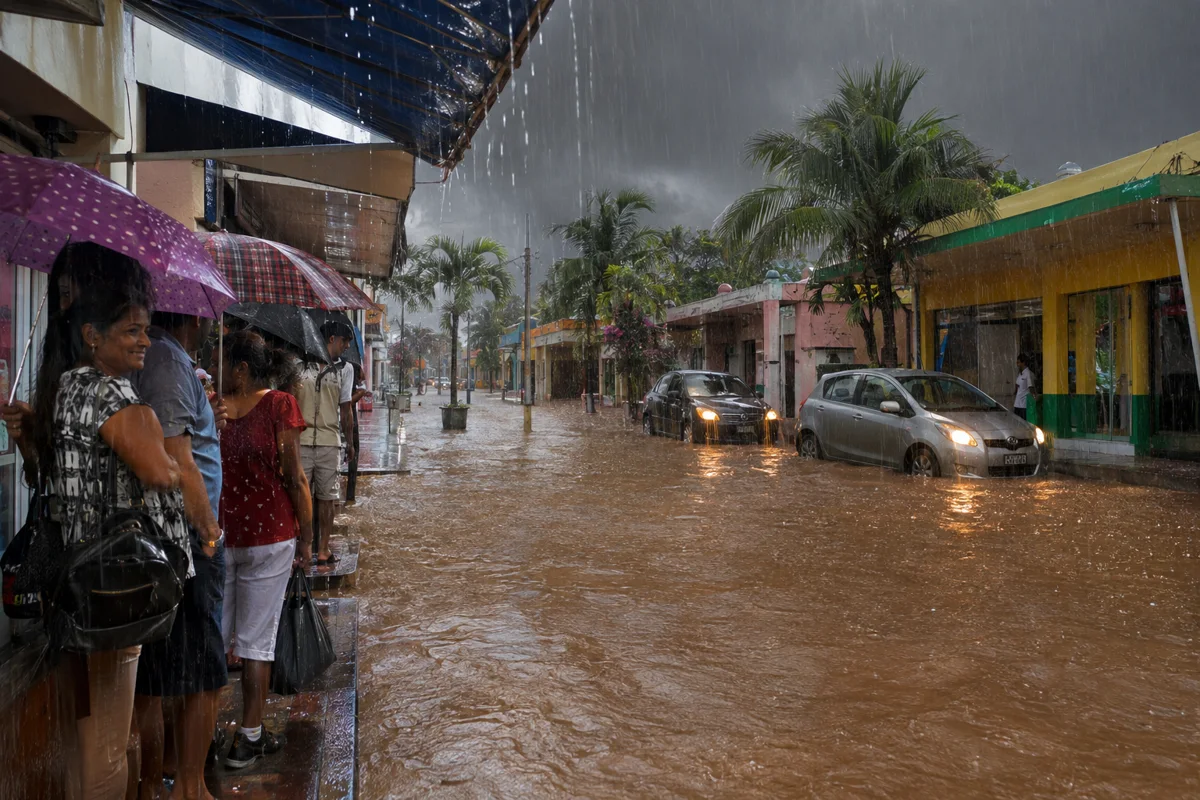
A shopping street flooded under pouring rain, with passers-by sheltering under an awning (illustrative image) A separate warning, cyclone or not

The lesson of 2024

Torrential rainSometimes the danger comes from water

In January 2024, Cyclone Belal did most of its damage through water: streets in Port-Louis turned into torrents, cars swept away. The MMS issues a separate warning for torrential rain, which can come without any cyclone warning. On that day, avoid the roads and never drive into a flooded street or bridge. Under the law passed on 17 November 2026, nobody is required to go to work or stay at work during this warning, except emergency services.

When
Torrential rain warning
Schools and offices
No work required
Outside
No flooded roads
At home
Stay dry
What helps, and what you need to know

What helps

  • In the private sector, salary is maintained and paid remote work earns at least double
  • The torrential rain warning is on the MMS website, like the cyclone warning

Good to know

  • With a simple heavy rain warning, you go to work, unless the National Crisis Committee orders otherwise
  • Your home insurance must cover flooding, not just wind
Class by class

What changes for you

Practical pointers, warning by warning: what stays open, and what to do at home.

What happensIn practiceClass IClass IIClass IIIClass IV
Schools are openThey close from Class IIChildren at home afterwards Yes
You can move aroundShopping, filling up with water, getting homeUp to Class II YesYes
Offices are workingEmployees are released in Class IIISalary maintained afterwards YesYes
Your car stays insured on the roadIn principle, no longer from Class IIIRead your policy YesYes
The cyclone kit is readyWater, radio, torch, tinned food, medicinesFrom Class I YesYesYesYes
Shutters secured, loose items put awayIt all gets done before the gustsNot in the middle of the storm YesYes
You stay indoorsIn the safest part of the houseUntil the all-clear YesYes

Based on the warning system and precautions published by the MMS, the Guide de l'expatrié Île Maurice (Expat.com, 2026) for school and insurance, and the law passed on 17 November 2026 for work. Government announcements on the day itself take precedence.

The 2026-2027 season

Four things to know for this summer

What the forecasts published in late October by the MMS and by Météo-France La Réunion say.

January to March the peak

The months to watch

The season runs from 1 November to 15 May, but the risk is highest in the height of summer.

5 à 7 storms

The MMS forecast

This covers the whole basin, not Mauritius alone. Météo-France expects 6 to 10, with activity probably lower than normal.

Close to normal

The risk for the island

Despite a calmer season overall, Météo-France considers the risk for Mauritius, Rodrigues and La Réunion close to normal.

80 % of the usual rainfall

A drier summer

Around 1,100 mm expected, with the rains setting in during the last week of November. A torrential downpour remains possible.

Live

History of the 2026-2027 season

Every named storm in the basin and every warning issued for Mauritius or Rodrigues, taken from the MMS website. The page updates with each change.

TodayBulletin read on 8 November at 3.50pmNo warning

Mauritius: no cyclone warning. Rodrigues: no cyclone warning. Before deciding anything, rely on the MMS bulletin, the radio and television.

AguedaNamed on 20 October by MadagascarNo warning in Mauritius

Formed on 19 October north of Seychelles, well before the season opened. It brought heavy rain to Seychelles, then dissipated off Kenya on 27 October, far from Mauritius. No warning was issued in Mauritius or Rodrigues.

Before the first warnings

Five habits to adopt from November

Everything that can be prepared in calm weather is one less thing to do on the day the warning is issued.

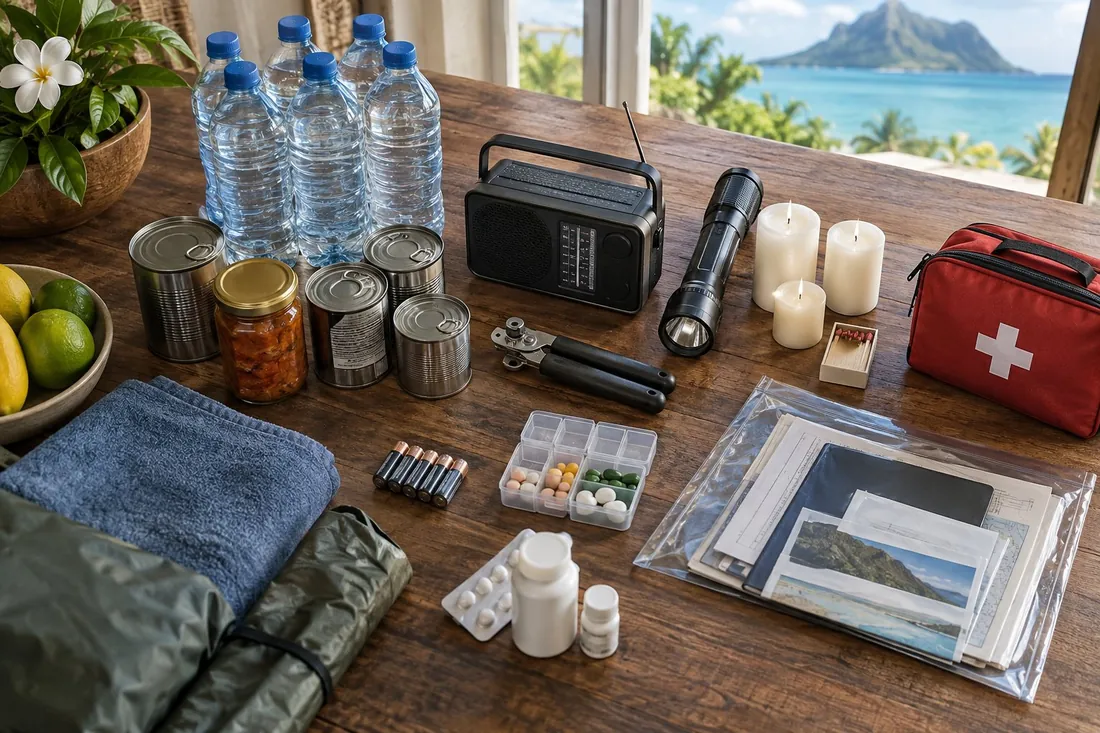
  • Put the kit together. Battery-powered radio, torch, water, tinned food and a tin opener, first aid kit, medication, and documents in a waterproof pouch.
  • Walk around the house. Trim branches close to the roof and power lines, put away anything that could blow away, and check the shutters.
  • Locate the nearest shelter. If your home is not safe, know where the nearest shelter is before you need it.
  • Reread your insurance policies. Home: cyclone and flood cover. Car: what is covered under Class III and IV.
  • Keep the right numbers to hand. The MMS bulletin, the radio, and emergency numbers within easy reach.

Important numbers

A cyclone kit on a table: radio, torch, water, tinned food, first aid kit (illustrative image)
Frequently asked questions

Cyclones in Mauritius: your questions

The official season runs from 1 November to 15 May, according to the Mauritius Meteorological Services (MMS). The risk is highest from January to March. A storm can form outside these dates: Agueda was named as early as 20 October 2026.

The status shown at the top of this page is checked against the MMS website at least every 15 minutes. When it comes to taking action, the reference remains the MMS bulletin, relayed by radio and television: if in doubt, it is the bulletin that counts.

Class I is issued 36 to 48 hours before gusts of 120 km/h. Class II allows, as far as possible, 12 hours of daylight, and Class III 6 hours of daylight. Class IV means those gusts have already been recorded. A safety bulletin then lifts the warning, followed by the all-clear.

For the 2026-2027 season, the MMS expects 5 to 7 named storms across the whole south-west Indian Ocean, and they will not necessarily pass near Mauritius. A direct hit on the island remains rare: there are one to two per decade.

No. Most summer days are perfectly normal, and the sea is warmer from December to April. Just allow for a little flexibility: a changeable ticket and travel insurance. For a move or for administrative procedures, the austral winter, from May to October, is still simpler.

In Class III, businesses release their employees. Under the law passed on 17 November 2026, during Classes III and IV and the safety bulletin, an employer cannot require you to come to work or stay at work, except in emergency services, and normal pay is maintained in the private sector. The employer can only ask for work to resume after the green light from the national crisis committee, if transport is provided or buses are running, and then pays for the full day.

No. With an MMS torrential rain warning (at least 100 mm of widespread rain, expected to last several hours), nobody is required to go to work or stay there, except emergency services: this is the law passed on 17 November 2026. With a heavy rain warning (25 mm in 30 minutes), you work, unless the national crisis committee orders otherwise. Remote work can only be requested where there is no danger and no power or network outage; in the private sector, it is paid at no less than double rate. If school closes during the day, no minor child leaves alone: a parent or relative comes to collect them.

Yes, schools close as soon as a Class II warning is issued. They stay closed during Class III and IV warnings. The reopening is announced after the warning is lifted: follow the notices from the school and the ministry.

From Class III, a car on the road is in principle no longer covered by insurance. If it is parked in shelter, your contract decides: read the cyclone clause again. For your home, check that your home insurance covers cyclones and flooding.

The MMS recommends a battery-powered radio and fresh batteries, a torch, candles and matches, stored water, tinned food with a tin opener, rice, flour and biscuits, a first-aid kit and your medicines, clothes in plastic bags and a few tools (hammer, nails, rope).

Batsirai (February 2022) and Emnati (February 2022) led to Class IV warnings. Freddy (February 2023) and Garance (late February 2025) led to Class III warnings. Belal (January 2024) mainly caused flooding in Port-Louis. In January 2026, Dudzai led to a warning for Rodrigues.

The MMS distinguishes between a tropical depression, a moderate tropical storm, a severe tropical storm, and then a tropical cyclone, intense and very intense. Warnings apply to all these systems if they threaten the island. A depression is given a name when it becomes a moderate tropical storm.

The names come from a list set for each season, proposed by the countries of the region. Mauritius names the storms that form between 55° and 90° east longitude, and Madagascar those that form further west. This season, after Agueda, will come Bertrand, Celiwe, Dira, Emmie, then Hisna, a name proposed by Mauritius.

Advisers available
Ready to take the plunge?
  • Free
  • No obligation
  • French-speaking advisers
Request a free call back
Our guides

More guides

Read on 8 November 2026 on the website of the Mauritius Meteorological Services (MMS): cyclone warning system, precautions, list of names for the 2026-2027 season, seasonal forecast for summer 2026-2027. Season history: MMS bulletins collected automatically, at most every 15 minutes. Météo-France La Réunion forecast (28 October 2026), storm Agueda and past cyclones: Wikipedia, based on Météo-France and the press. School and insurance: Guide de l'expatrié Île Maurice (Expat.com, 2026). Work during a cyclone or torrential rain: National Disaster Risk Reduction and Management (Amendment) Bill (No. XXVII of 2026), passed without amendment by the National Assembly on 17 November 2026 (official record no. 32), not yet published in the Government Gazette on 19 November 2026; rainfall thresholds: Mauritius Meteorological Services (Warnings) Regulations 2023. This page does not replace the official bulletins. Satellite photo: MODIS Land Rapid Response Team, NASA GSFC (public domain, Wikimedia Commons). The other visuals are illustrative images.