Skip to content
Expatriation-Maurice
Which visa or permit is right for you?

Free, 2 minutes, instant result.

Take the quiz
Free call-back request
Water and food safety·Mauritius

Is tap water in Mauritius safe to drink?

Yes. It is treated, then tested every day. On holiday, stick to bottled water while your stomach gets used to it; once you have settled in, many households switch to a filter. Here is everything you need to know, from glass to plate.

Updated 5 November 2026

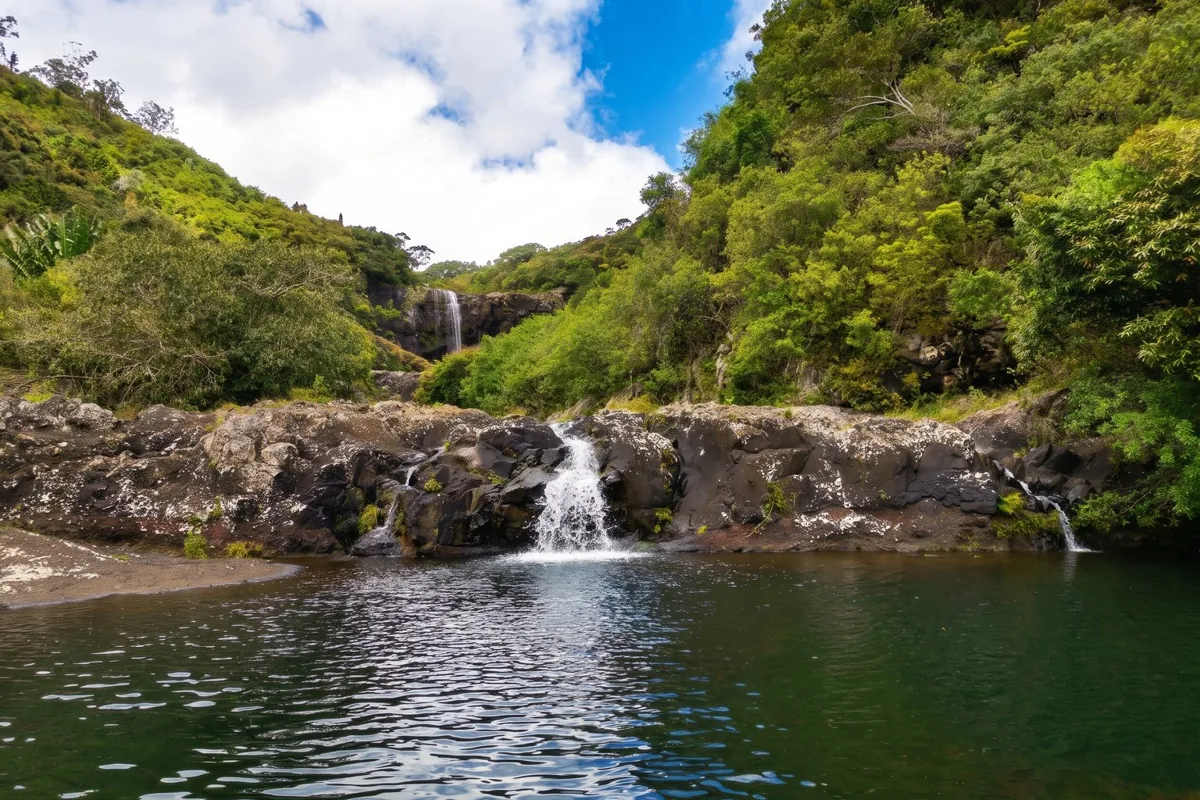
A clear river cascades down through a lush green gorge at the Tamarind Falls (Sept Cascades) in Mauritius
Seven Cascades of TamarindThe island's fresh water
  • 160 pointsof control across the island, roughly
  • Every daysamples taken all over the country
  • 1 million m³of treated water a day, approximately
  • Rs 26 (about $1)for 1.5 L of Mauritian bottled water
In your glass

Tap, filter or bottle: what to choose, and when?

There is no single right answer. It all depends on how long you spend on the island and on what is coming out of the tap that day. Here is our advice, situation by situation.

Your waterOn holidaySettled all year roundFor a babyAfter heavy rainAs a reserve
From the tapRs 45 (about $1) a month, up to 10 m³ Yes
FilteredAbout Rs 8,500 (about $180) for an under-sink unit (estimate) Yes
BoiledThe price of gas YesYes
BottledAbout Rs 26 (about $1) for 1.5 L YesYesYesYesYes

For cooking, washing up or taking a shower, tap water is fine for everyone, even on holiday. For two people who each drink 2 L a day, bottled water costs almost Rs 2,080 a month, about $44 (our calculation).

From reservoir to tap

Why you can trust it

Public water goes through several checks before it reaches your home. It meets World Health Organization standards and, at the last stage, it is you who take over.

  1. 1

    Reservoirs and boreholes

    The water comes from the island's reservoirs and from underground aquifers.

  2. 2

    The treatment plant

    Alum, settling, sand filter, then chlorine: seven large plants and around sixty small units.

  3. 3

    On-site tests

    Each plant has its own small laboratory and checks the water every hour.

  4. 4

    The central laboratory

    ISO/IEC 17025 accredited. It monitors acidity, turbidity and chlorine everywhere, as well as bacteria, metals and micro-algae.

  5. 5

    Your tank

    The last link in the chain: kept properly closed and cleaned regularly, it keeps the water as it arrived.

Through the year

Three moments to change your habits

The water stays the same all year round. What changes is the weather, and a few simple habits are enough to adapt.

After heavy rainMainly from November to AprilThe water may come out cloudy

If it looks brownish, don't drink it. Use bottled water, wait until it runs clear again, then boil it to be safe.

Water cutsDepending on the region and the rainA tank at home

Each region has its own supply times, which are tightened when rain is scarce. Most houses have a tank, sometimes with a pump.

A cycloneFrom November to AprilA stock of bottled water

Keep water in reserve. Once the cyclone has passed, boil tap water until you are told otherwise.

On your plate

What can you eat with peace of mind?

Food is one of the great pleasures of the island, and a few simple habits are enough. Tell us which describes you: the most useful guides come first.

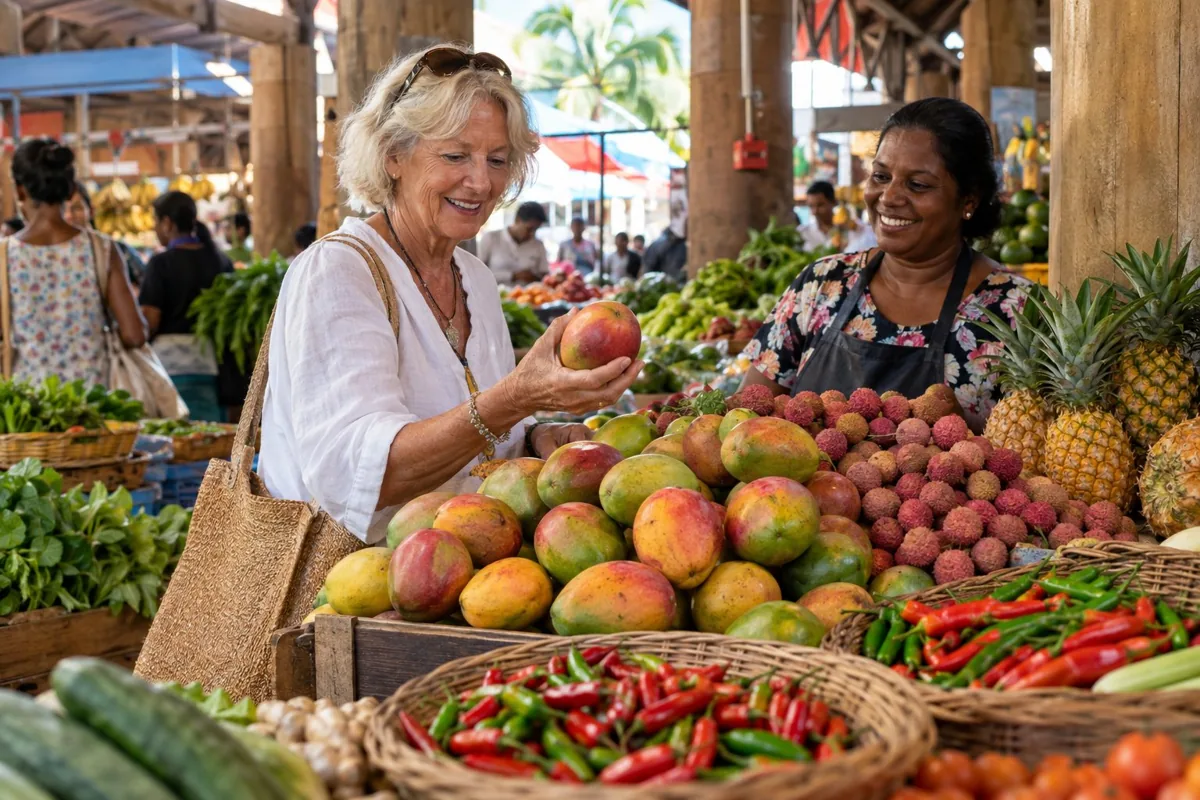
Customer choosing mangoes at a market stall in Mauritius, with pineapples, chillies and fresh vegetables At the market

Mangoes, pineapples, brèdes, chillies

Fruit and vegetablesThe best of the island, washed or peeled

The market is one of the great pleasures of life here, and local produce stays cheap. The only habit that matters: rinse anything eaten raw in drinking water, and peel when you can. In the first few days, if your stomach is delicate, start with fruit you peel and cooked vegetables; the rest will follow soon enough.

Our view
Our view
What to do
Rinse, or peel
On holiday
On holiday
Once you have settled in
Once you've settled in
The upside and the points to watch

The upside

  • Local produce costs far less than imported
  • Seasonal fruit and vegetables all year round
  • Stalls for every budget

Good to know

  • A salad in a restaurant depends on the house water: choose a reliable place
  • Cut fruit left waiting in the sun: leave it
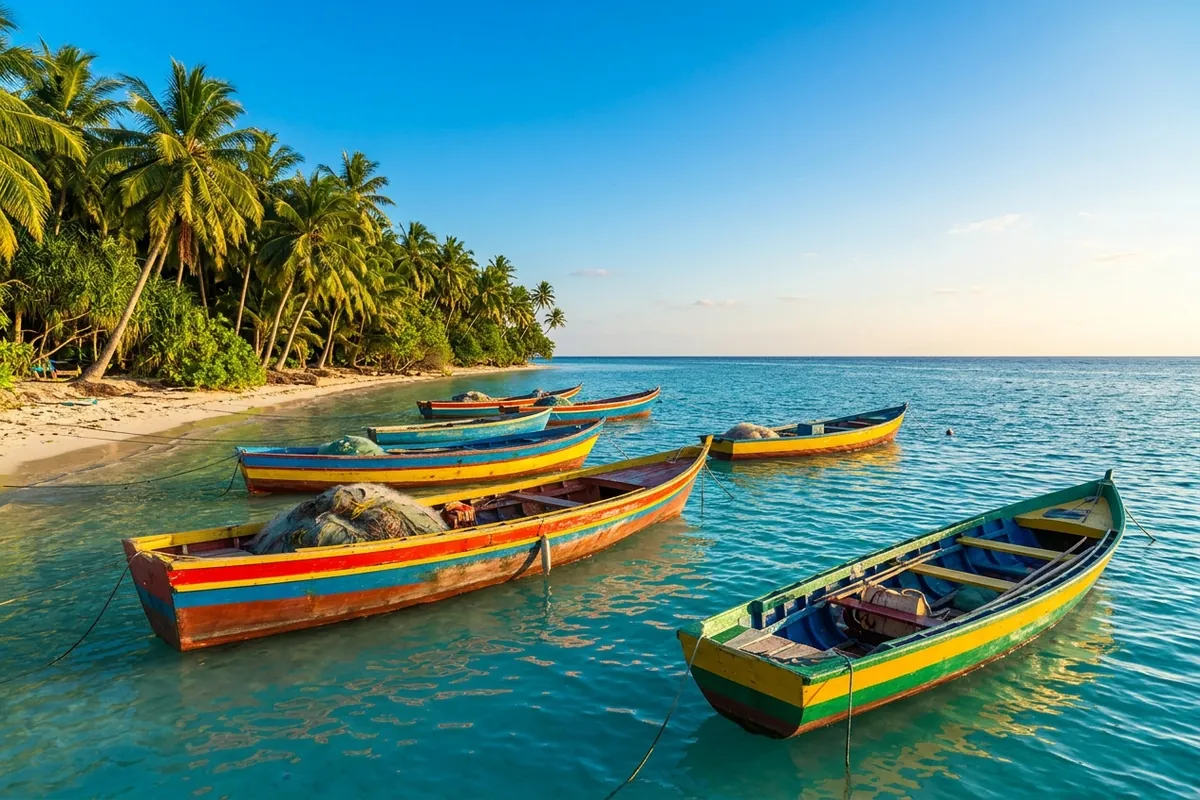
Colourful fishing boats moored on the turquoise lagoon in Mauritius Catch of the day

Vindaye, grills, rougaille

Fish and seafoodAt the stall, the sorting is already done

Some reef fish can carry a toxin, such as ciguatera, that cooking does not destroy. Mauritius has dealt with the problem through legislation: 21 species are classed as toxic and cannot be sold, and a few others are allowed only under conditions of origin or weight. At a fishmonger's or in a restaurant, the risk is therefore very low. Just one rule of thumb remains: if a large reef fish is offered to you at the water's edge, ask what it is, and if in doubt, pass.

Our view
Yes, from a professional
What to do
Chilled, well cooked
On holiday
Cooked rather than raw
Once you have settled in
Find your fishmonger
The upside and the points to watch

The upside

  • An official list of species banned from sale, updated in 2022
  • Species sold under conditions are sold whole, so you can see what you are buying
  • Barracuda (tazar lichien), vara-vara, giant clam, eleven-spotted crab: already off the stalls

Good to know

  • The bourgeois, the trevally and some old fish depend on their origin or weight
  • Raw or lightly cooked fish: only at a place you know
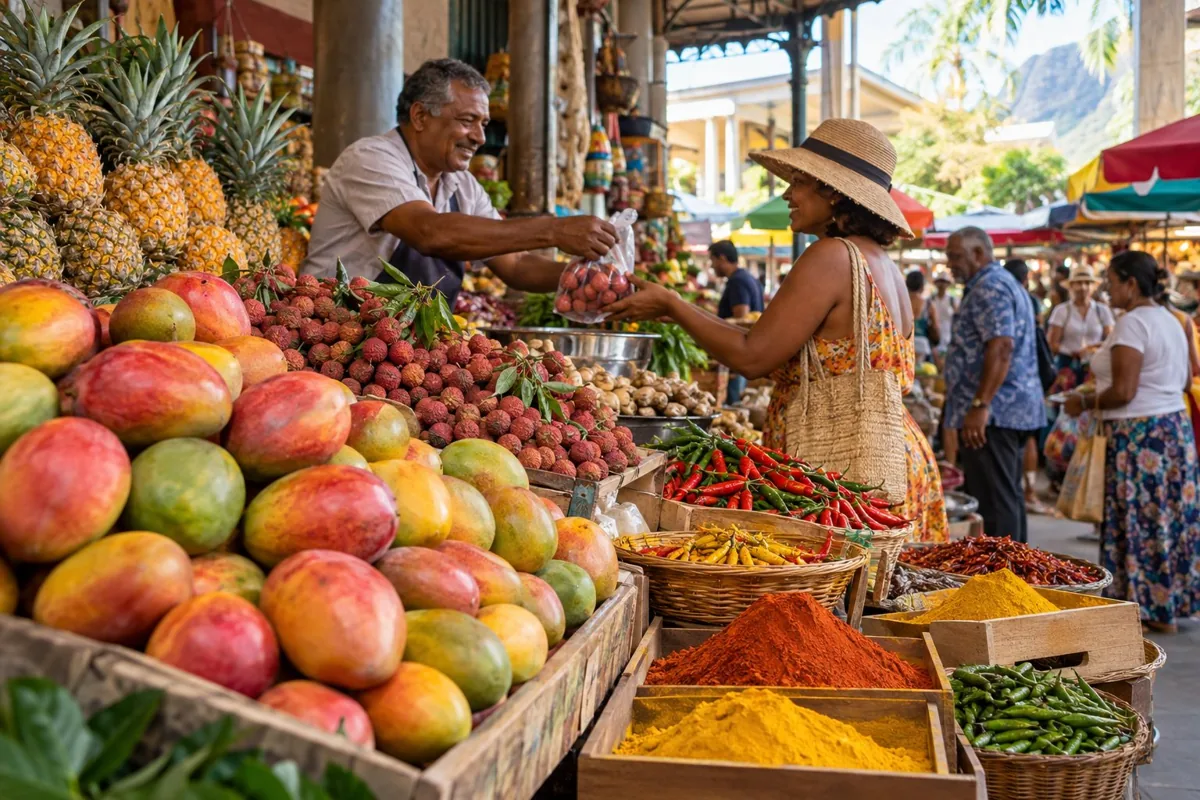
Mauritian market with spices, fruit and customers gathered around a stall under wooden posts On the go

Cheap, hot, shared

Street foodDholl puri and chilli cakes, not to be missed

Dholl puri, a yellow lentil flatbread filled with curries and chutneys, can be shared for a few dozen rupees. Here, handling food for the public requires a certificate, issued to people who have completed the training. For the rest, do as Mauritians do: go where there is a queue. What sells quickly stays fresh, and what comes out hot in front of you is the safest.

Our view
A must-try
What to do
Where there is a queue
On holiday
Hot, prepared in front of you
Once you have settled in
You will have your own favourite spots
The upside and the points to watch

The upside

  • A full meal for a few dozen rupees
  • A real way into island life
  • A compulsory certificate for anyone handling food

Good to know

  • Whatever has just been prepared is still the best choice
  • Sensitive stomach: wait a few days before trying the spicier chutneys
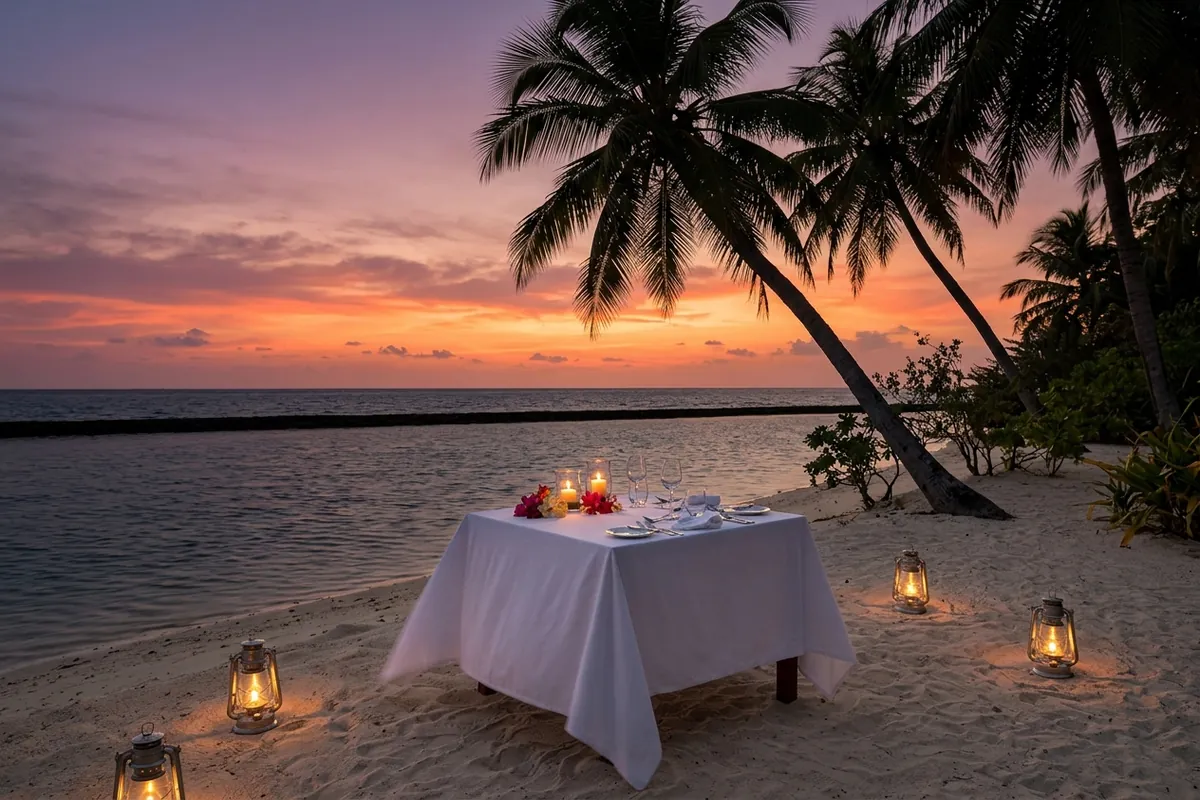
Table set on the beach at sunset, with lanterns, facing the lagoon At the table

Creole, Indian, Chinese, French

Restaurants and buffetsSimplest of all: a place with a steady turnover

Since 2022, every operator has had to be registered, and authorised officers can enter premises, take samples, have them analysed and ban an activity if necessary. At the table, it is simple: a hot dish arrives hot, and a full dining room is a good sign. The buffet is the only place to look at a little more closely: hot food must stay properly hot, cold food properly chilled, and nothing should be left sitting out.

Our view
No worries
What to do
A busy dining room
On holiday
Sealed bottled water at the table
Once you have settled in
Carafe water, depending on the place
The upside and the points to watch

The upside

  • Very varied cuisine, at every price
  • Inspections provided for by law
  • A full dining room remains the best guide, anywhere on the island

Good to know

  • Ice and carafe water: ask what water they are made with
  • Shellfish and reheated dishes: best avoided if you are only passing through
Food safety

What is already watching over your plate

A good part of the work is done before the food reaches your table.

  • Well-stocked shelves. The island imports 75 to 82% of what it consumes: you will find plenty of familiar products alongside local ones.
  • A recent law. The Food Act 2022 governs imports, the registration of food businesses, testing and product recalls.
  • Trained people. Handling food for the public requires training and a certificate.
  • Inspectors in the field. They can enter premises, take samples, seize goods and ban an activity when necessary.

Preparing your medicine kit

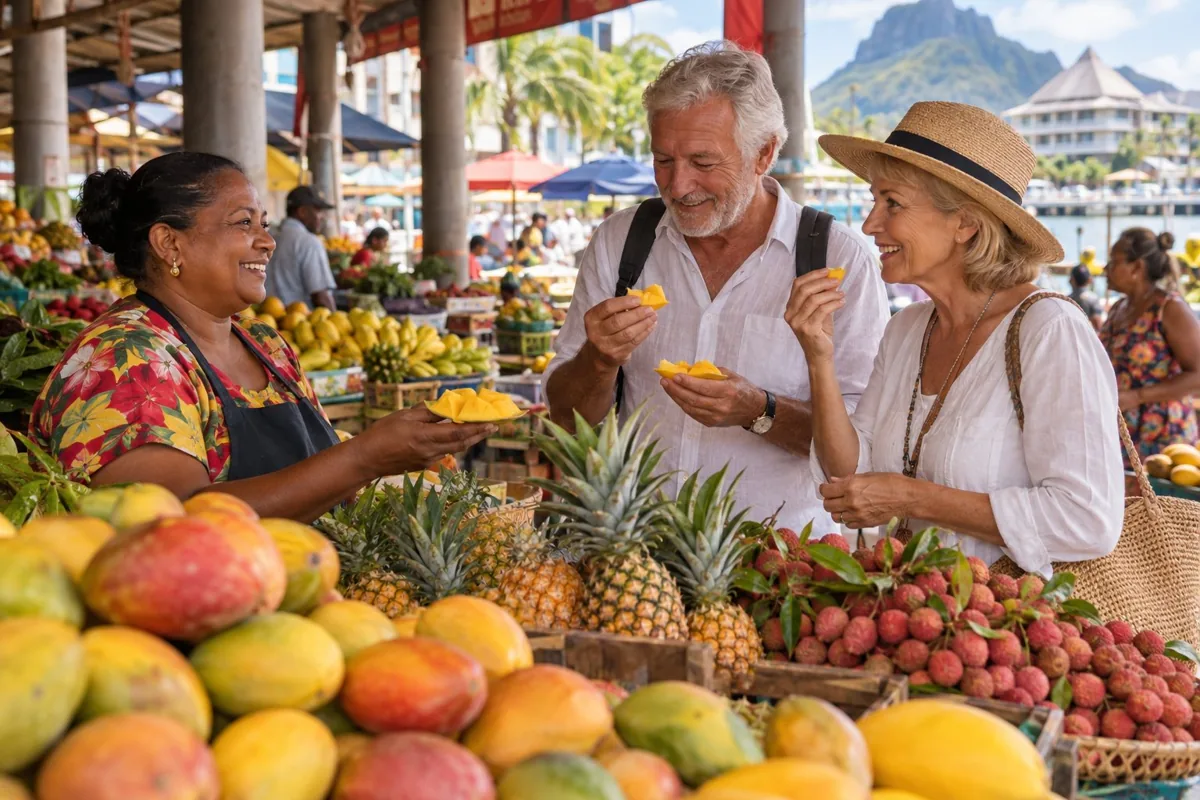
Couple tasting fresh fruit offered by a stallholder at a market in Mauritius
Just in case

Upset stomach? The right steps to take

A change of water and food can take its toll in the first few days. Most of the time it passes on its own. And if you are staying a long time, talk to your doctor about hepatitis A and typhoid vaccines.

  • Drink often. Bottled water, in small sips. Pharmacies sell oral rehydration salts.
  • Eat simply. Rice, a banana, nothing very spicy for a day or two.
  • See a doctor if there is a fever or blood, if it lasts more than two days, or if it affects a baby or an elderly person.
  • In an emergency: the SAMU answers on 114. A consultation costs about Rs 2,000, about $43.

Hospitals and clinics

Smiling pharmacist advising a customer at the counter of a pharmacy in Mauritius
Frequently asked questions

Water and food in Mauritius

Yes, mains water is drinkable: it is treated, chlorinated and tested every day, and it meets World Health Organization standards. On holiday, keep to bottled water all the same: the chlorine and the change of water can upset the stomach during a short stay. Once settled, many households switch to a filter, mainly for the taste.

The public network serves about 96% of households, and the same checks apply across the island. What can differ from one house to another is what happens after the meter: an old tank or a worn pipe. In a home you do not know, start with bottled water or a filter.

It is not compulsory, but it is the simplest choice if you are staying: no more bottles to carry, and water with a more neutral taste. Allow about Rs 8,500 for an under-sink model, about $180, based on a single price found online in November 2026: it is an estimate. You then need to change the cartridges as often as the manufacturer states.

For brushing teeth, tap water is fine for almost everyone. If you have a delicate stomach or are only here for a few days, use bottled water, it takes no effort. For ice cubes, simply ask at the restaurant: they are made with the house water, filtered or not.

Bottled water, or tap water that has been boiled and then cooled. For a newborn's bottles, your paediatrician will tell you which water to choose, as they would before any trip.

This can happen after heavy rain. Do not drink it until it runs clear again: use bottled water in the meantime, then boil it to be safe. If it persists, the water authority answers on 170.

Water does not flow continuously everywhere: each region has its own supply schedule, and the gaps between supplies get longer when the island's reservoirs are low, as during the lack of rain in 2026. That is why most homes have a storage tank, sometimes with a pump. The situation changes from one week to the next: the water authority's announcements give the current schedules.

From the tap, very little: Rs 45 (about $1) a month up to 10 m³. Bottled, Mauritian water costs about Rs 26 (about $1) for 1.5 litres, or nearly Rs 2,080 a month, about $44, for two people who each drink 2 litres a day (our calculation). Imported waters cost much more: over Rs 160 (about $3) for 1.5 litres.

Yes, and it would be a shame to miss out: dholl puri, gâteaux piment and farata are part of island life. Pick a stall with a queue, and eat things that are served hot and prepared in front of you. Anyone handling food intended for the public must hold a certificate. In your first few days, if your stomach is delicate, go gently.

The law already bans the sale of 21 risky species, such as barracuda (tazar lichien), vara-vara, giant clam or the eleven-spot crab; others, such as bourgeois or trevally, may only be sold under conditions. If you buy from a fishmonger or eat in a restaurant, this sorting is done for you. Just avoid large reef fish offered directly at the water's edge if you know neither its name nor its origin.

The Ministry of Health, through its inspectors. Since the Food Act of 2022, operators must be registered. Officers can enter an establishment, take samples, have them analysed, seize goods, order measures or ban an activity, and a product can be recalled. As for drinking water, it is also the Ministry of Health that enforces the standards.

Drink often, in small sips, using bottled water; pharmacies sell rehydration salts. Eat plain food. See a doctor if there is a fever or blood, if it lasts more than two days, or if the patient is a baby or an elderly person. A consultation costs about Rs 2,000, about $43. In an emergency, the SAMU answers on 114.

Advisers available
Ready to take the plunge?
  • Free
  • No obligation
  • French-speaking advisers
Request a free call back
Our guides

More guides

Prices recorded in October and November 2026, euros at the day's rate. The price of the filter and the bottled-water budget are estimates. Tamarind Falls (Sept Cascades): photo by Z thomas, CC BY-SA 4.0, retouched.