+33 9 8080 1114
 +230 5457 0712

The essentials in 30 seconds
- Faith is part of everyday life: in the 2022 census, only 0.6% of Mauritians said they had no religion.
- The major sacred sites: Grand Bassin, Père Laval's tomb, the Jummah Mosque, the Kwan Tee Pagoda. You go in as a respectful visitor.
- Everyone practises their own religion: the Constitution guarantees the freedom to believe, to change religion and to practise it.
- Ayurveda is regulated by law: a practitioner must be registered with the Traditional Medicine Board. Check before you pay.
- Nobody is cured of an illness by changing island: an ongoing treatment continues in Mauritius, with a doctor.
An island where almost everyone believes
What strikes you on arrival is not some particular "energy": it is the place of faith in everyday life. A temple at the edge of a sugar cane field, the call to prayer in Port-Louis, a procession on a Sunday morning. Four major traditions live side by side, on an island of 1.2 million people.
| Religion | Share |
|---|---|
| Hindus (including Tamils, Telugus, Marathis) | 47,9 % |
| Christians | 32,3 % |
| of whom Catholics | 24,9 % |
| Muslims | 18,2 % |
| Buddhists and Chinese religion | 0,4 % |
| No religion | 0,6 % |
| Others and not stated | 0,6 % |
2022 Population Census, Statistics Mauritius, Demography volume published in May 2024 (tables D5 and D6): 1,233,097 residents, with religion declared by each.
The Constitution protects freedom of conscience: to believe, not to believe, to change religion and to practise it, alone or in a community. The major festivals of each tradition are public holidays for everyone, from Cavadee to Christmas, Eid and Divali. The 2022 census details the religion of each district.
Public holidays in Mauritius, festival by festival
Our advice
Religion is not a topic for starting a conversation. Mauritians happily talk about it once they know you, but avoid raising it straight away, just as you would politics.
Sacred places worth seeing
These are first and foremost places of worship, and that is what makes them precious for anyone seeking calm. You go in as a discreet visitor, preferably outside services and major festivals.
Grand Bassin, the sacred lake
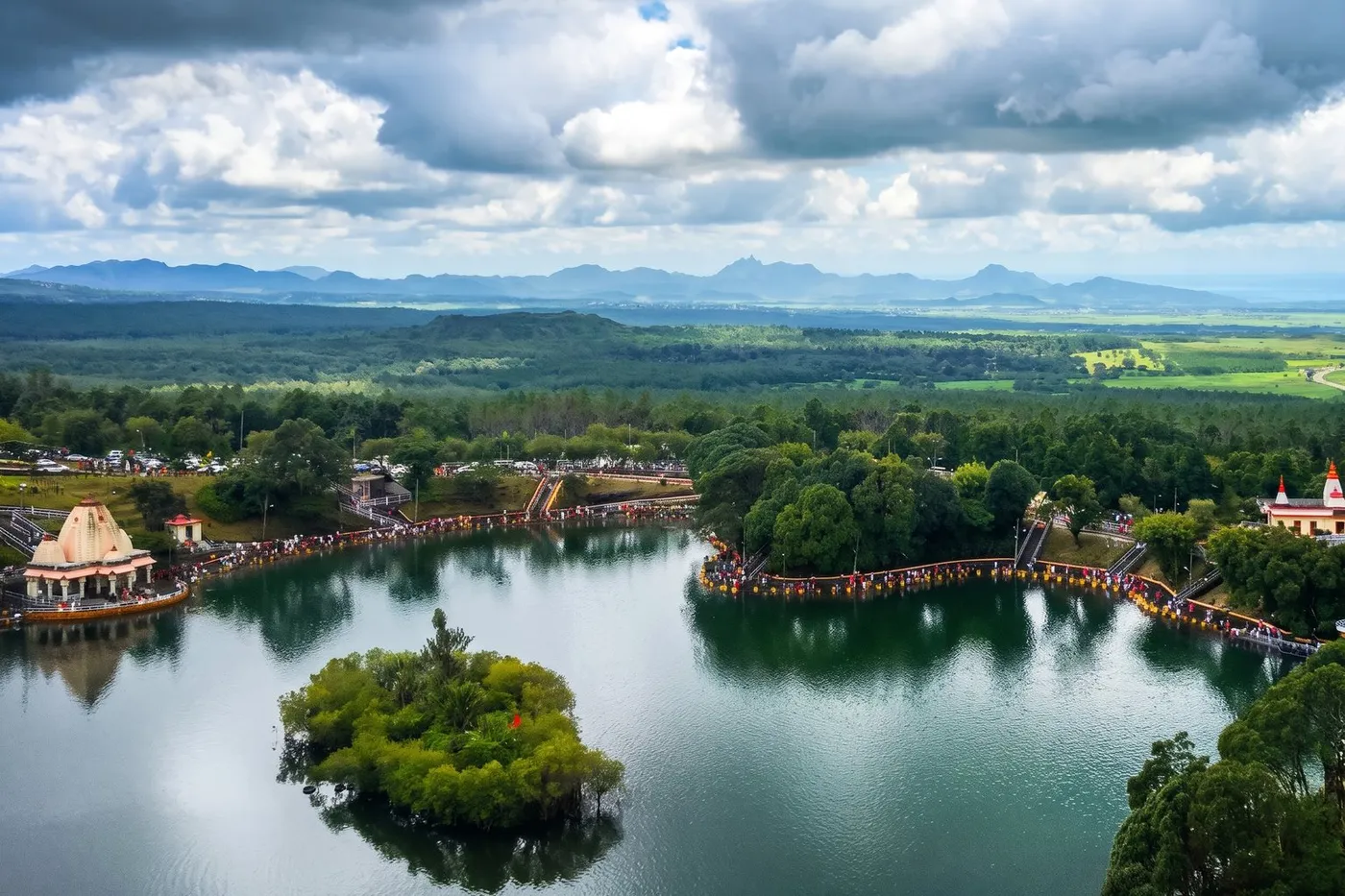
A crater lake at 550 m above sea level, in the South, in the middle of the forest. Mauritian Hindus link its waters to those of the Ganges; it has been called Ganga Talao since 1972. Close by, a 33 m statue of Shiva, unveiled in 2007, is the tallest on the island. It is the heart of the Maha Shivaratri pilgrimage, in February or March.
The legend of Grand Bassin, and the island's other stories
Père Laval, at Sainte-Croix
A French missionary who arrived in 1841, died on 9 September 1864 and was beatified in 1979. His tomb, at the church of Sainte-Croix, on the outskirts of Port-Louis, receives tens of thousands of pilgrims of all religions on the night of 8 to 9 September each year. John Paul II prayed there in 1989, and Pope Francis celebrated Mass at Marie Reine de la Paix in 2019.
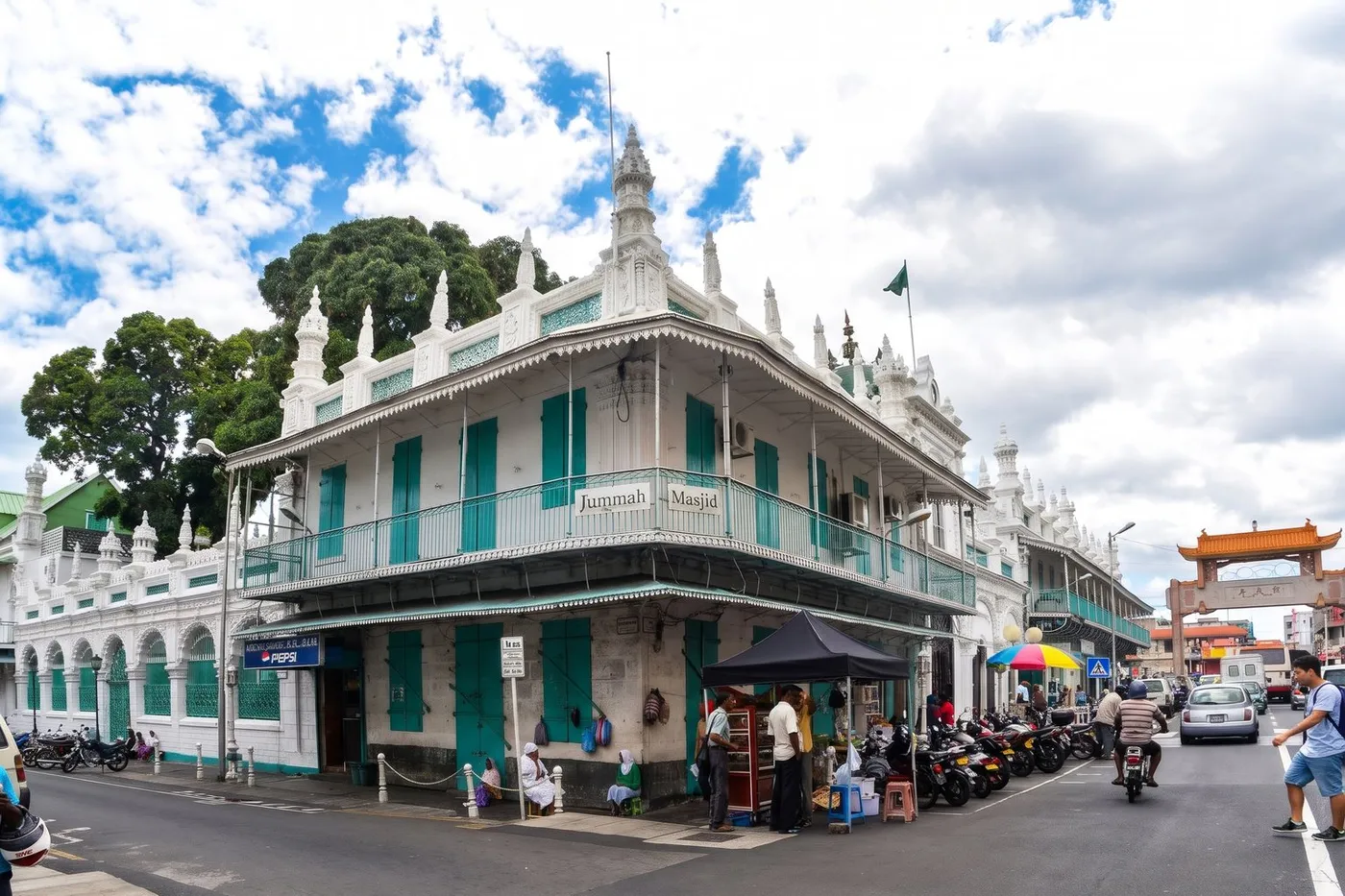
| Venue | Good to know |
|---|---|
| Jummah Mosque, Port-Louis | Founded in 1852 and extended until 1895, on Royal Street. |
| Kwan Tee Pagoda, Les Salines, Port-Louis | The oldest pagoda in Mauritius and in the Southern Hemisphere, listed as national heritage since 2016. |
| Maheswarnath Mandir, Triolet | Built between 1888 and 1891, presented as the largest Hindu temple on the island. |
| Saint Louis Cathedral, Port-Louis | Seat of the Bishop of Port-Louis, right in the centre. |
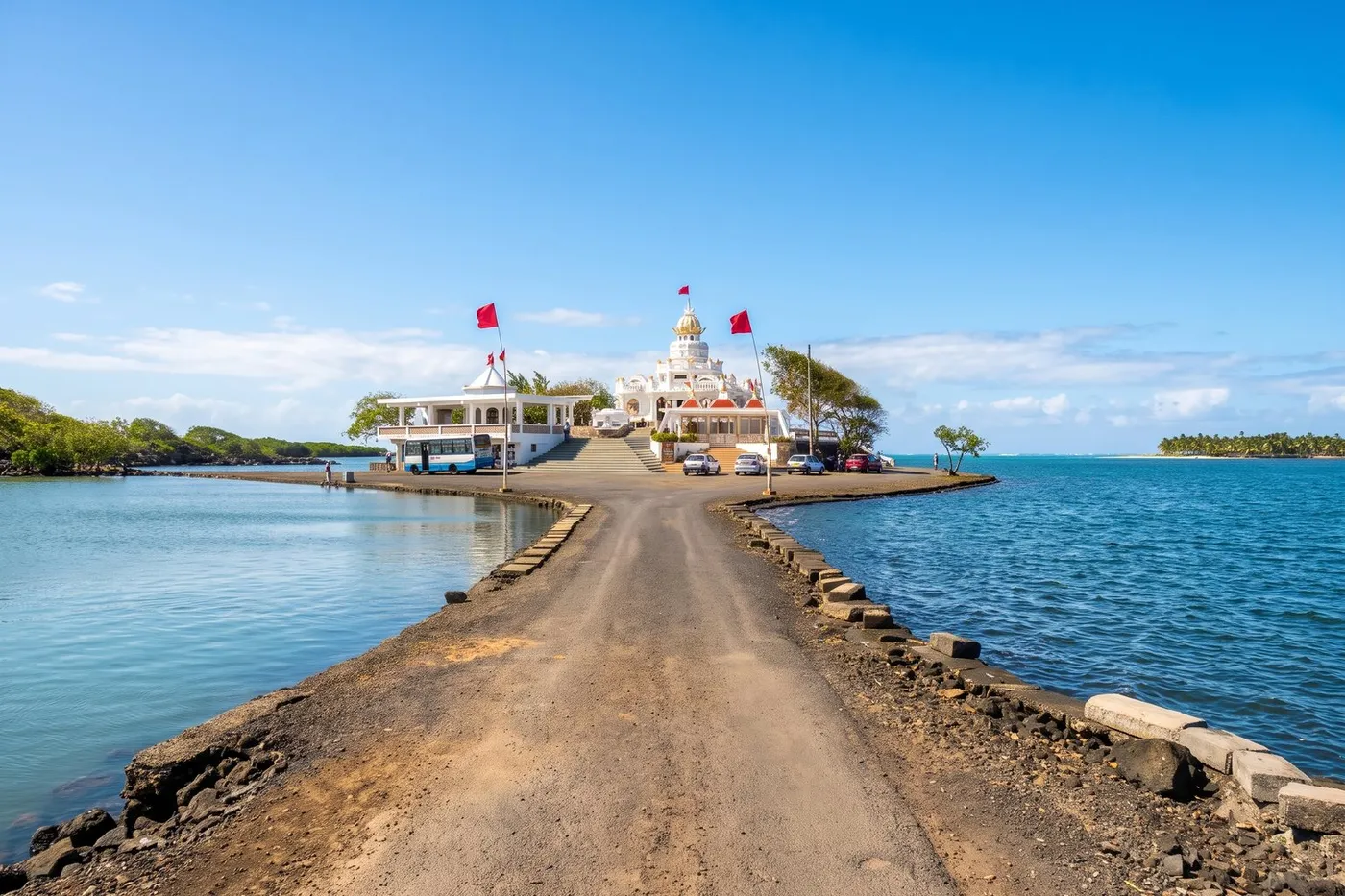
| Shiv Sagar Temple, Poste de Flacq | On a small islet linked to the coast by a causeway, facing the lagoon. |
Dates and descriptions taken from Wikipedia (the article for each place and Culture of Mauritius) on 19 November 2026.
Visiting a place of worship without a misstep
These are first and foremost places of prayer. You are expected to behave as any visitor would in a church or mosque in France.
-
1
Appropriate dress
No beachwear. Covered shoulders and legs are the safest choice everywhere.
-
2
Discretion
During a prayer or a ritual, stay back and speak quietly.
-
3
Ask before taking a photo
Of the buildings, usually yes; of worshippers, only with their consent.
Good to know
During Maha Shivaratri, pilgrims walk for hours along the roads to Grand Bassin. Allow extra time, drive slowly, and visit the lake on another day if you are looking for peace and quiet.
Practising your religion once you have settled in
Catholic, Protestant, Muslim, Hindu or Jewish: everyone can find their community in Mauritius, larger or smaller. The language of the service varies from place to place: French, Creole, English or an Indian language.
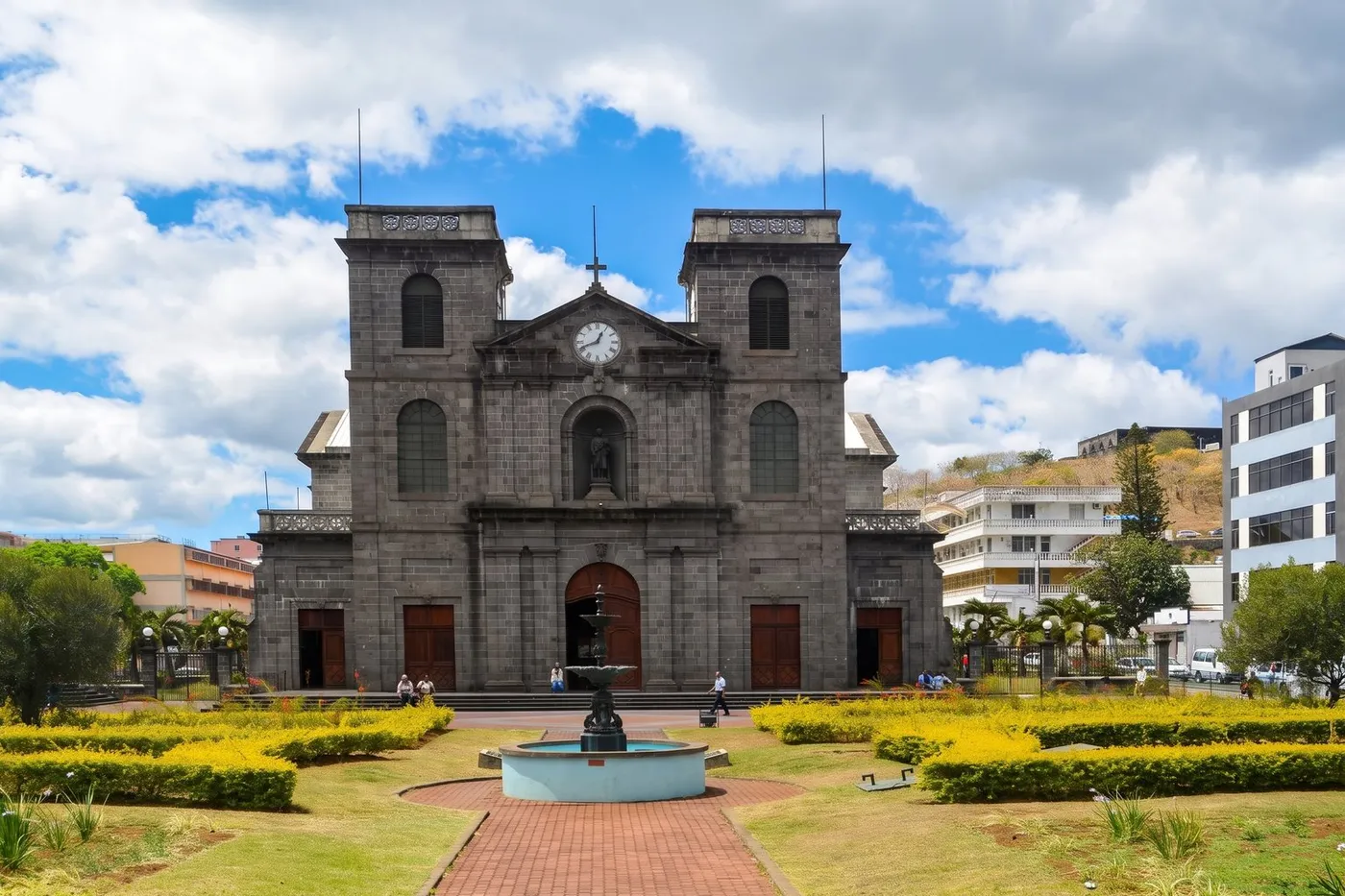
- Catholics: one Mauritian in four. The Bishop of Port-Louis has his seat at Saint Louis Cathedral;
- Protestants: the Presbyterian Church of Mauritius, founded in 1814 by Pastor Jean Lebrun, has six parishes, including Saint-André in Rose-Hill. The Evangelical and Pentecostal churches bring together more than 20,000 worshippers;
- Muslims: almost one resident in five;
- Hindus: almost one resident in two, from varied traditions: Tamil, Telugu, Marathi and others;
- Small communities: Buddhists and followers of the Chinese religion (about 5,000 people), Baha'is (543), Jews (40, in the 2022 census).
Our advice
To find a parish or community near you, ask your landlord or your neighbours: in Mauritius, everyone knows the local place of worship.
Yoga, ayurveda: what the law says
The Ministry of Health stresses the point: Mauritius is one of the few countries outside India where Ayurveda is recognised and governed by law. The Ayurvedic and Other Traditional Medicines Act of 1989 covers three practices: Ayurveda, homeopathy and Chinese medicine.
- A register: the Traditional Medicine Board registers practitioners and publishes their list every year;
- Practising without being registered is prohibited, as is presenting yourself under a practitioner's title;
- The penalty: a fine of up to Rs 10,000 (about $210) or 12 months in prison;
- A foreigner can be registered on a temporary basis, provided they hold a Work Permit or have the right to work in Mauritius.
The Ministry of Health also runs six public Ayurvedic clinics: free consultations, remedies handed out free of charge, panchakarma on prescription, and therapeutic yoga advice. They received 44,257 visits over one year, in 2021-2022. The Ministry's page does not give their addresses: ask at the hospital in your region.
Good to know
A herb or a treatment programme does not replace prescribed medical treatment. If you are on treatment, keep your doctor, and tell them what else you are taking.
Before booking a treatment programme or a therapy, ask the practitioner for their certificate of registration. The text of the law is online on the Attorney General's website.
Our advice
Are you a yoga teacher, an Ayurvedic practitioner or a homeopath and want to practise here? You will need two things: a permit that allows you to work, and registration with the Board for treatments.
What Mauritius offers, and what it does not promise
Many websites sell Mauritius as an island that "heals". We prefer to be honest: what the island offers is real, but it is not a cure.
What you will find
- Sacred places to visit, often in the middle of nature.
- A society where faith is lived openly, without shame and without obligation.
- Recognised and regulated Ayurveda, free in the public sector.
- A slower pace of life, with the sea and the mountains close by.
Enough to truly recharge.
What you will not be promised
- A cure: no serious source guarantees one.
- A dance or a treatment programme that "purifies": these are traditions, not medical care.
- A life free of worries: moving abroad remains a major change.
Be wary of anyone who promises more.
If you are moving in order to feel better after a hard time, also plan for support on the spot. Psychologists and psychiatrists practise in Mauritius.
Mental health in Mauritius: therapists and support
To live in Mauritius all year round, you need a residence permit. If you are coming to spend your retirement here, that is the retirement permit.
Sources: Statistics Mauritius, 2022 Housing and Population Census, Demography volume (May 2024), tables D5 and D6; Constitution of Mauritius, section 11 (constituteproject.org); Ayurvedic and Other Traditional Medicines Act 1989 (Attorney General, revised text); Ministry of Health, Hospital Services page (2021-2022 figures); Wikipedia (Ganga Talao, Jacques-Désiré Laval, Jummah Mosque, Maheswarnath Mandir, Culture of Mauritius, Cathédrale Saint-Louis de Port-Louis, Presbyterian Church of Mauritius); presbyterian.mu; National Library of Mauritius (Christmas). Read on 19 November 2026.