+33 9 8080 1114
 +230 5457 0712

The essentials in 30 seconds
- The sun doesn't stop in winter: 6.5 to more than 8 hours of sunshine a day, and thin cloud lets through up to 80% of UV.
- The Mauritius weather service does not publish a UV index: use the one in your weather app. From 3, protect yourself; from 8, step it up.
- Sunscreen is not enough: SPF 50+, every 2 hours and after swimming, but shade, a T-shirt and a hat come first. Allow Rs 684 (€13) to Rs 795 (€15) for a 175 to 250 ml bottle in a supermarket.
- Check your medicines: anti-inflammatories, doxycycline and some heart or blood pressure treatments make the skin sensitive to the sun.
- Living in the sun puts you in the "at risk" group for melanoma: a check with the dermatologist once a year, and a look at your moles every three months.
A stronger sun, all year round
According to the Mauritius weather service, the island gets 6.5 to more than 8 hours of sunshine a day, and up to more than 8 hours on the coasts in summer, from November to April. In winter, the coast still gets more than 7.5 hours of sun: there is no season when you can forget the sunscreen.
This service publishes cyclone, torrential rain and swell warnings, but no UV index. Use the one in your weather app, and read it with the WHO scale.
| UV index | What to do |
|---|---|
| 0 to 2, low | No protection needed |
| 3 to 5, moderate | Protect yourself: shade in the hot hours, hat, sunscreen |
| 6 to 7, high | Protect yourself, SPF 30 sunscreen at least |
| 8 to 10, very high | Step it up: SPF 50+ sunscreen, avoid the midday sun |
| 11 and above, extreme | Stay in the shade at midday |
WHO scale (practical guide to the UV index); sunscreen protection factors recommended by the Haut conseil de la santé publique (sante.fr, July 2025).
-
1
The hours
UV is at its strongest in the four hours around solar noon. In France's overseas territories, the Institut national du cancer advises avoiding the sun from 10am to 2pm.
-
2
Water and sand
Dry sand reflects about 15% of UV, sea foam 25%. Even under a parasol on the beach, you still get UV.
-
3
Clouds
A hazy sky lets through up to 80% of UV: protect yourself on grey days too.
Summer heat and heatstroke
For summer 2026-2027, the weather service's seasonal forecast predicts highs of around 36 °C on the west coast and "scorching" conditions, hard going especially for vulnerable people, from December to March. The weather service does not issue heat warnings: it is up to you to adapt your days.
- The first 48 hours after arrival: go easy on yourself while your body adjusts;
- Drink regularly: France Diplomatie stresses the importance of staying hydrated;
- Save physical effort for early morning: walking, gardening, moving house;
- Avoid the hottest hours, as France Diplomatie advises for Mauritius.
Good to know
Heatstroke is an emergency. According to sante.fr, the signs are: intense heat, red skin, unusual behaviour, an unsteady walk, great tiredness and great thirst, cramps, nausea. Move the person into the shade, remove their clothes, cool them with water and damp cloths, and call 114, the SAMU.
For simple sunburn: a cool shower of fifteen minutes if there is no fever or shivering, drink water, and keep out of the sun until it has healed. See a doctor the same day if you have a fever, a severe headache, large blisters, a very extensive burn or feel faint.
Sunscreen: which one, how, how much
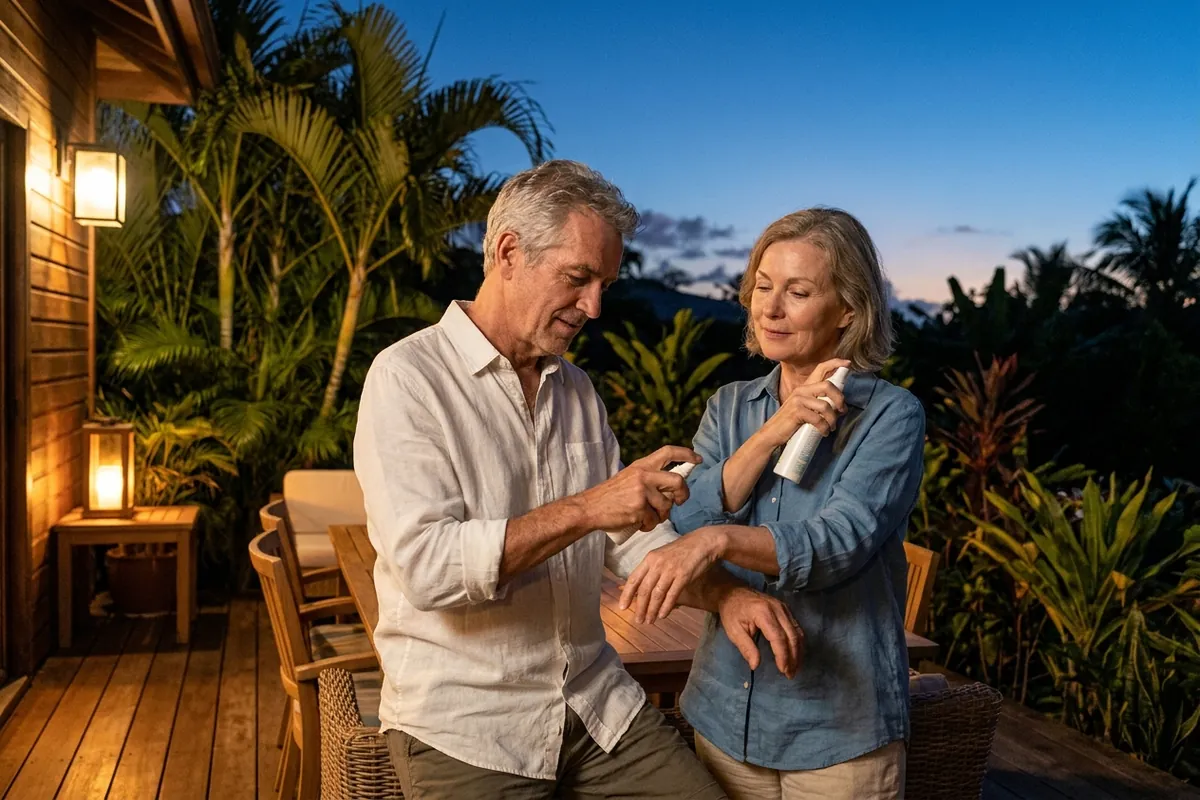
In the tropics, use a very high protection cream, SPF 50+, that filters both UVA and UVB. The French medicines agency (ANSM) and the French National Cancer Institute give the same rule of use.
- A generous layer on all exposed skin: ears, back of the neck, tops of the feet;
- Every 2 hours at most, and after every swim;
- Not to stay out longer: sun cream adds to shade and clothing, it does not replace them;
- Category 3 or 4 sunglasses, with a wraparound frame.
The main brands are sold in supermarkets. Here are prices found online at Winners, a supermarket chain, on 27 November 2026.
| Product | Price |
|---|---|
| Cancer Council cream SPF 50+, 250 ml | Rs 795 (€15) |
| Cancer Council cream SPF 50+, 500 ml | Rs 1,193 (€23) |
| Banana Boat Sport spray SPF 50, 175 ml | Rs 684 (€13) |
| Nivea children's spray SPF 50, 200 ml | Rs 1,400 (€27) |
| Eveline face cream SPF 50 | Rs 500 (€9.70) |
Prices shown on winners.mu on 27/11/2026, euros at the exchange rate of the day. Prices change with promotions.

Our advice
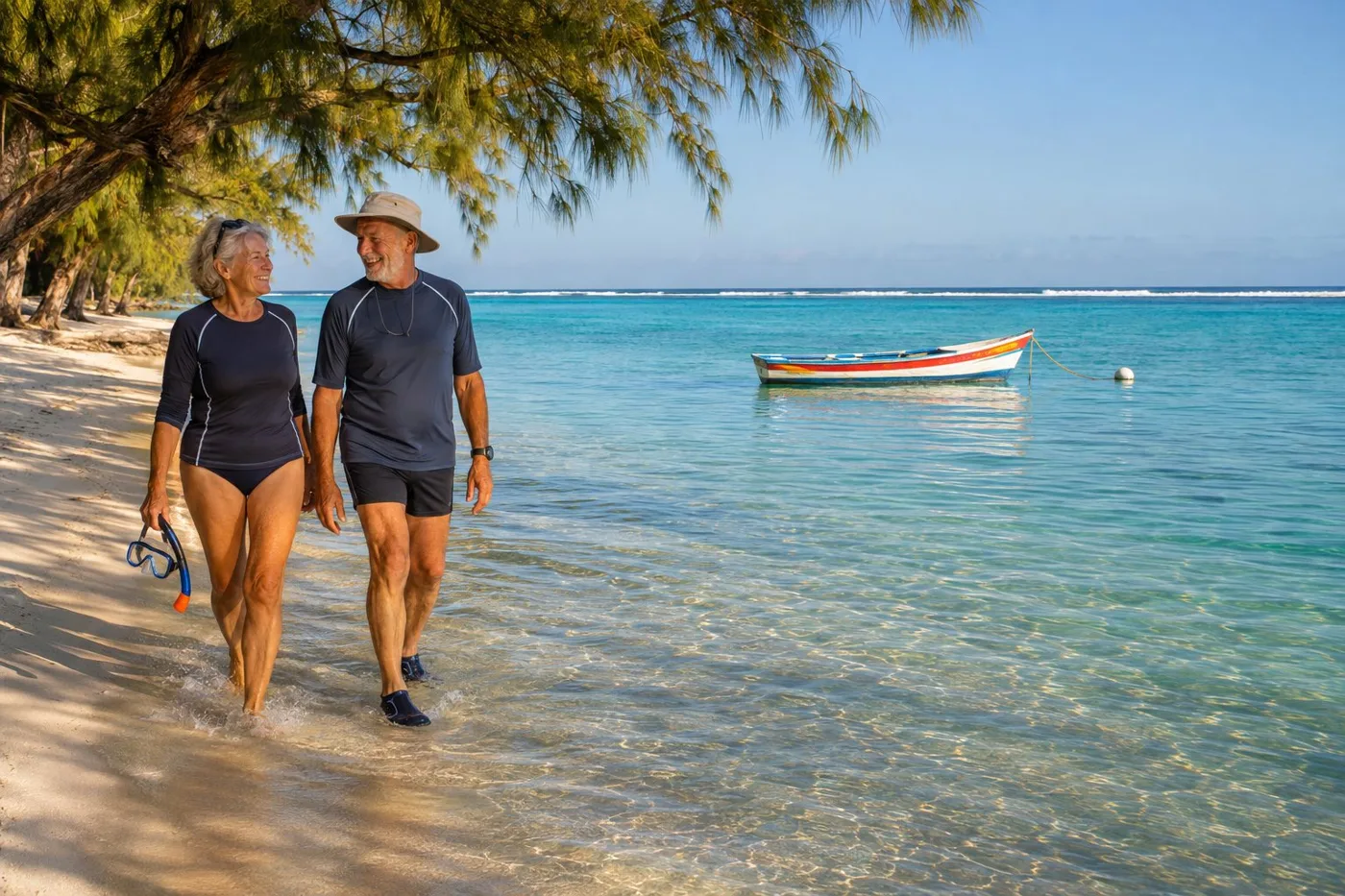
What about the lagoon? Mauritius has no rule on sun creams. The 2001 marine parks regulations only forbid discharging a polluting substance into the water. The French health agency (ANSES) has classed five filters as a risk to corals, including oxybenzone (benzophenone-3) and octinoxate, which Hawaii has banned from sale since 2021. If you swim above the reef, a UV-protective T-shirt reduces the amount of cream you need.
Medicines that make you sun-sensitive
Some common treatments cause burns or dark patches in the sun, even with little exposure. The ANSM keeps a list, which is not exhaustive. The most common are:
| Family | Examples |
|---|---|
| Anti-inflammatories | Ketoprofen, diclofenac, ibuprofen, piroxicam, aspirin, including in gel form |
| Antibiotics | Doxycycline, fluoroquinolones, sulphonamides |
| Acne | Isotretinoin |
| Heart, blood pressure | Amiodarone, furosemide, hydrochlorothiazide, amlodipine, statins |
| Others | Hydroxychloroquine, quinine, omeprazole, some antidepressants, St John's wort |
ANSM, main families of photosensitising medicines, July 2025. Non-exhaustive list.
Good to know
Never stop a treatment on your own. Ask your doctor or pharmacist whether it makes you sensitive to the sun, and take extra care to protect yourself for as long as you are taking it.
Children, the most exposed
According to the Institut national du cancer, 80% of skin cancers are linked to excessive sun exposure, especially regular and intense exposure during childhood.
-
1
Under 3 years old
Never in direct sun. Keep them in the shade, with a hat and covering clothes.
-
2
At the beach
Anti-UV T-shirt, hat, sunglasses, SPF 50+ cream on any exposed skin, reapplied after every swim.
-
3
At school
A cap and a small bottle of sun cream in the school bag, for break time and sport.
Checking your skin when you live in the sun
The Mauritian Ministry of Health recorded 182 new skin cancers in 2023, melanoma included, or 6.4% of the cancers diagnosed in the country, and 20 deaths in 2024.
The Institut national du cancer counts people who have lived for a long time in a very sunny region among those at risk. For them, it advises:
- A skin self-examination every three months, using the ABCDE rule: a mole that is Asymmetrical, has irregular Borders, uneven Colour, a Diameter that is growing, or that is Evolving;
- An examination by a dermatologist once a year.
In Mauritius, the Medical Council list includes 37 registered dermatology specialists, under four different titles.
Our advice
Before you leave, have a final check-up with your dermatologist in France and ask them to photograph or note down any suspicious moles. The dermatologist in Mauritius will then be able to compare.
Moving to the sun
The sun is one of the reasons people choose Mauritius. It is easy to live with if you adopt a few habits: go out early, take shelter at midday, cover up in the water, and have your skin checked every year.
Sources: World Health Organization (practical guide to the UV index, Q&A of 2022); Mauritius Meteorological Services (climate of Mauritius, summer 2026-2027 seasonal forecast); Ministry of Health of Mauritius (Health Statistics Report 2024, January 2026); IARC, GLOBOCAN 2024; Medical Council of Mauritius (list of specialists); Winners (online prices of 27 November 2026); ANSM (sun products; photosensitising medicines, July 2025); Institut national du cancer (melanoma brochure, July 2025); sante.fr (UV index and protection, July 2025; heatstroke and sunburn, August 2026); France Diplomatie (travel advice, Mauritius, September 2026); Fisheries and Marine Resources (Marine Protected Areas) Regulations 2001; ANSES (UV filters and coral reefs); State of Hawaii (Act 104 of 2018). Consulted in November 2026.